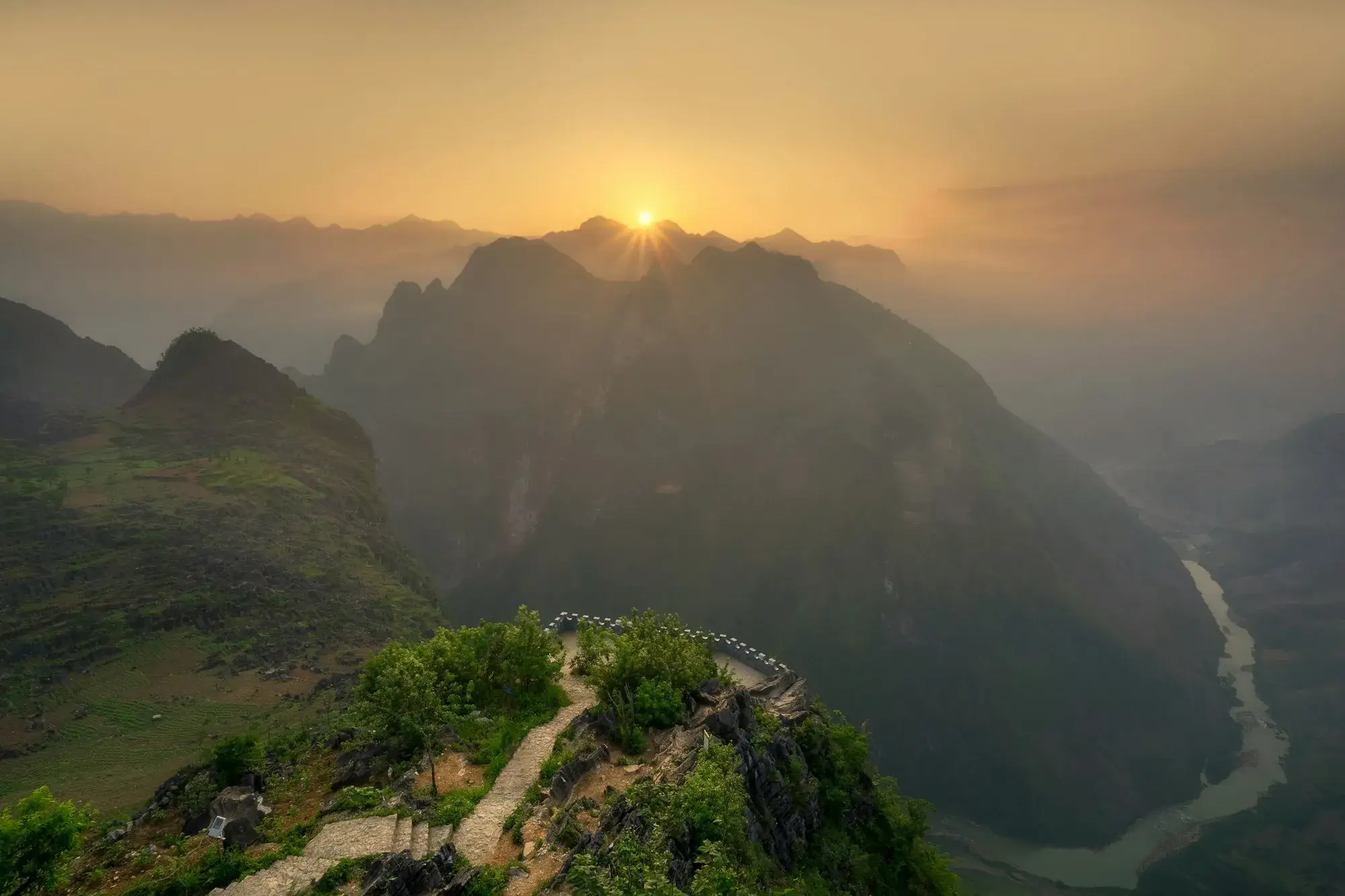
On generic weather apps, Ha Giang is typically displayed with a single icon and a general temperature figure. Yet anyone who has ever piloted a motorbike or car along the Loop quickly discovers a stark truth: there is no single weather forecast for Ha Giang on any given day.
You can depart Ha Giang City in 28°C sunshine wearing a light t-shirt. Yet within an hour, after winding up Bac Sum Pass to Quan Ba Heaven Gate, the temperature plunges to 18°C amidst gusting winds. And by the time you navigate Ma Pi Leng Pass in late afternoon, you might find yourself swallowed entirely by a wall of white mist where you cannot see headlights five metres ahead.
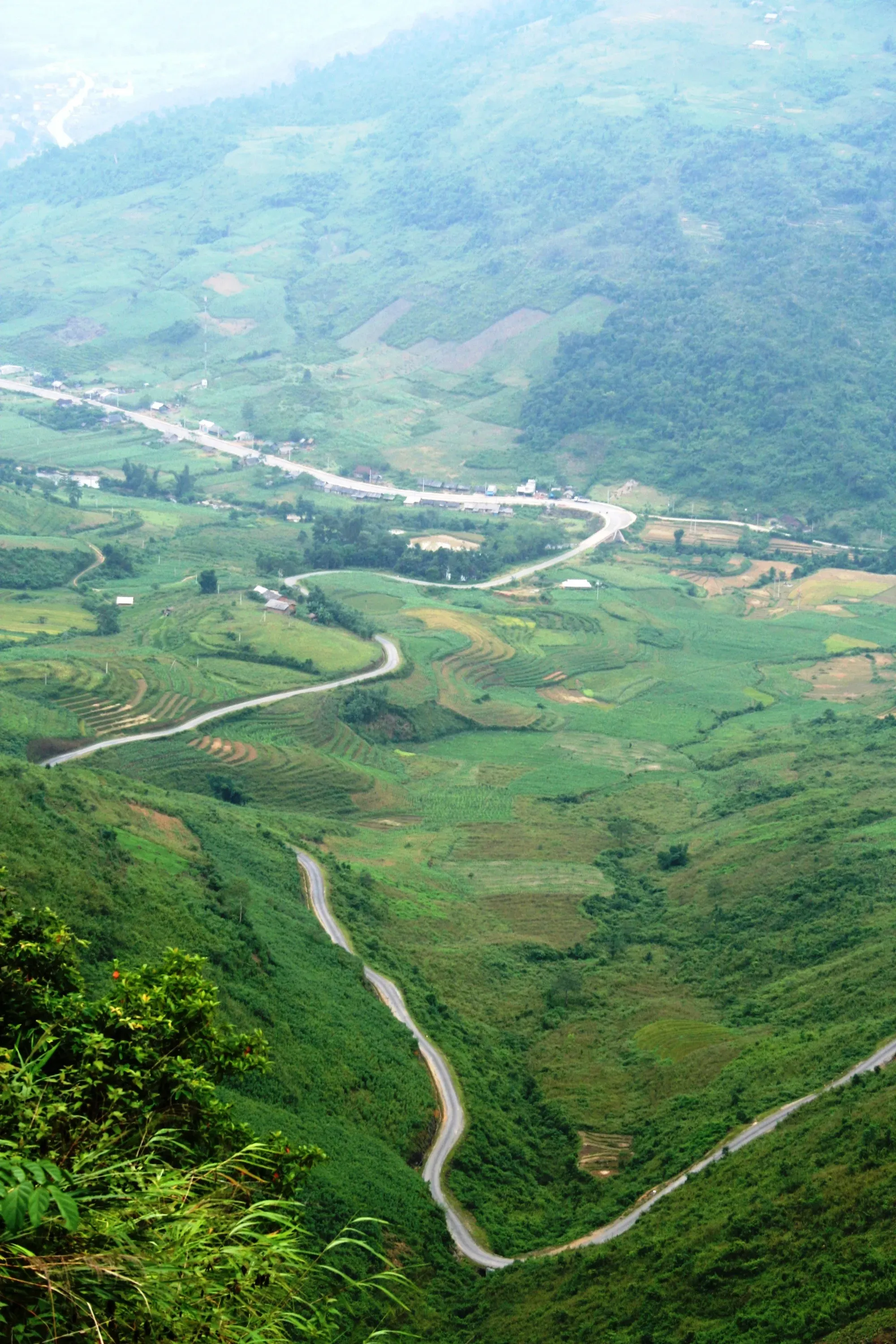
Understanding the shifting temperament of Ha Giang’s microclimates is crucial for keeping your journey both safe and memorable.
The “Four seasons in one day” phenomenon
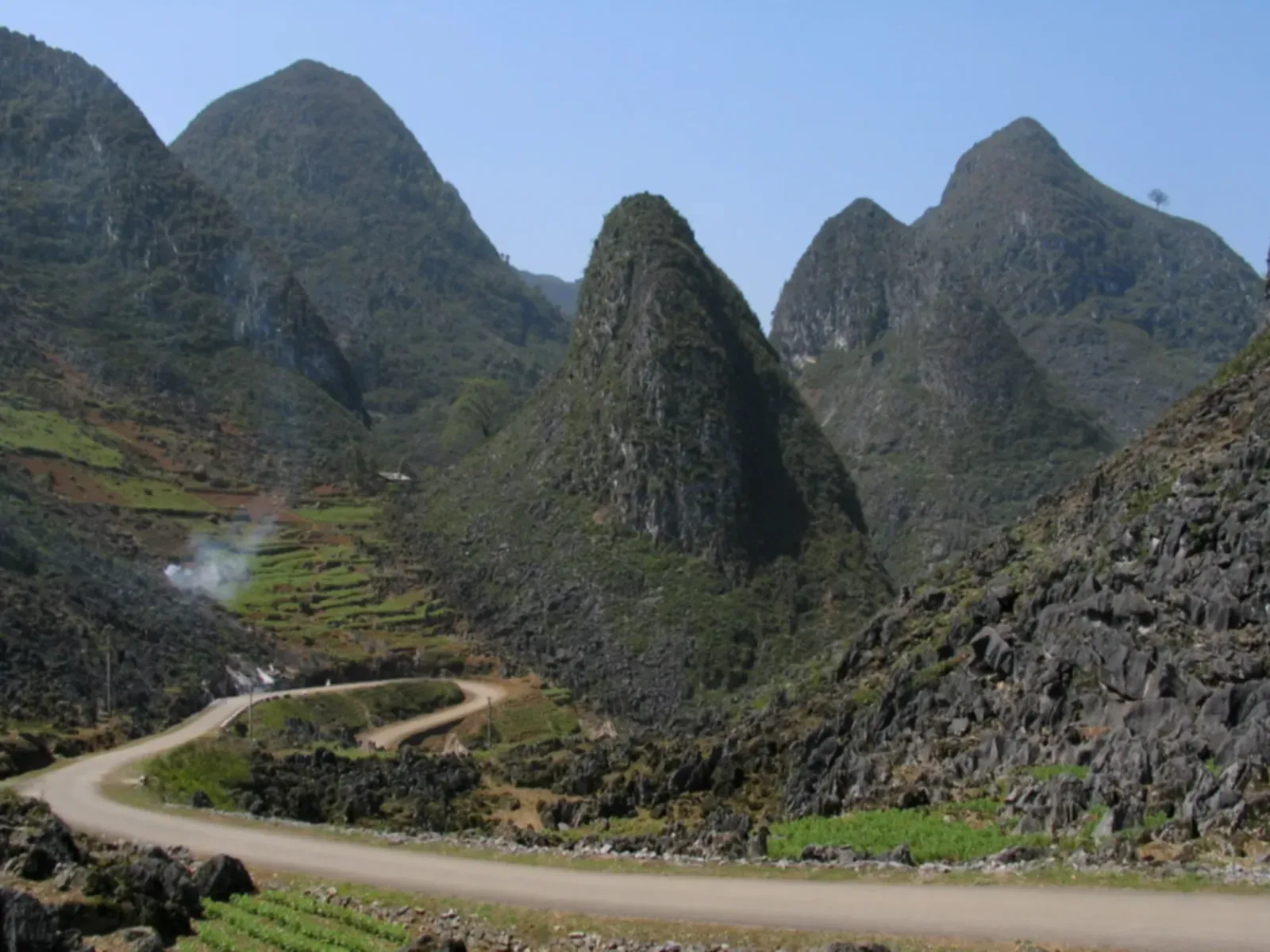
Ha Giang’s dramatic topography rises sharply from roughly 100 metres in southern river valleys to over 1,500 metres across the northern karst peaks of Dong Van. This extreme vertical relief creates distinct climatic bands across a single day:
- Early morning (Spring): Crisp, dewy air carrying moisture onto mountain peach and plum blossoms. Valleys like Sung La drift beneath lazy ribbons of low-hanging cloud.
- Midday (Summer): The sun beats directly onto exposed grey limestone crags. Heat radiates intensely from bare rock, parching the air and accelerating rider dehydration.
- Late afternoon after 15:30 (Autumn): The sun dips behind towering limestone ridges. Temperatures drop 5 to 7°C within 30 minutes as chilly mountain down-drafts sweep through narrow gaps.
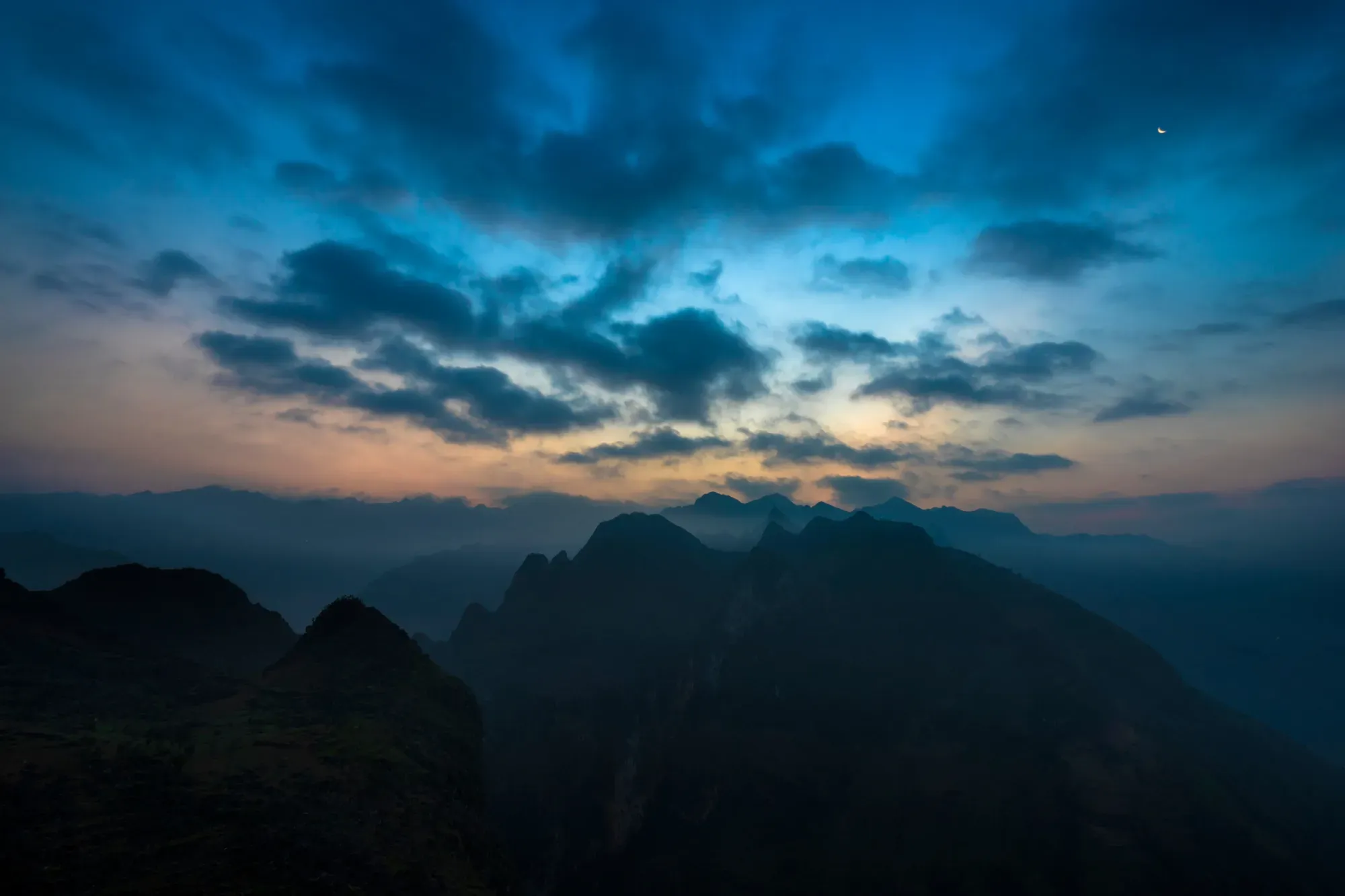
- Nightfall (Winter): Radiant heat escapes rapidly into the clear mountain sky. Even in mid-summer, nights in Dong Van or Meo Vac require warm blankets and a glowing hearth fire to stay comfortable.
Clouds and dense fog: beauty masking hazard
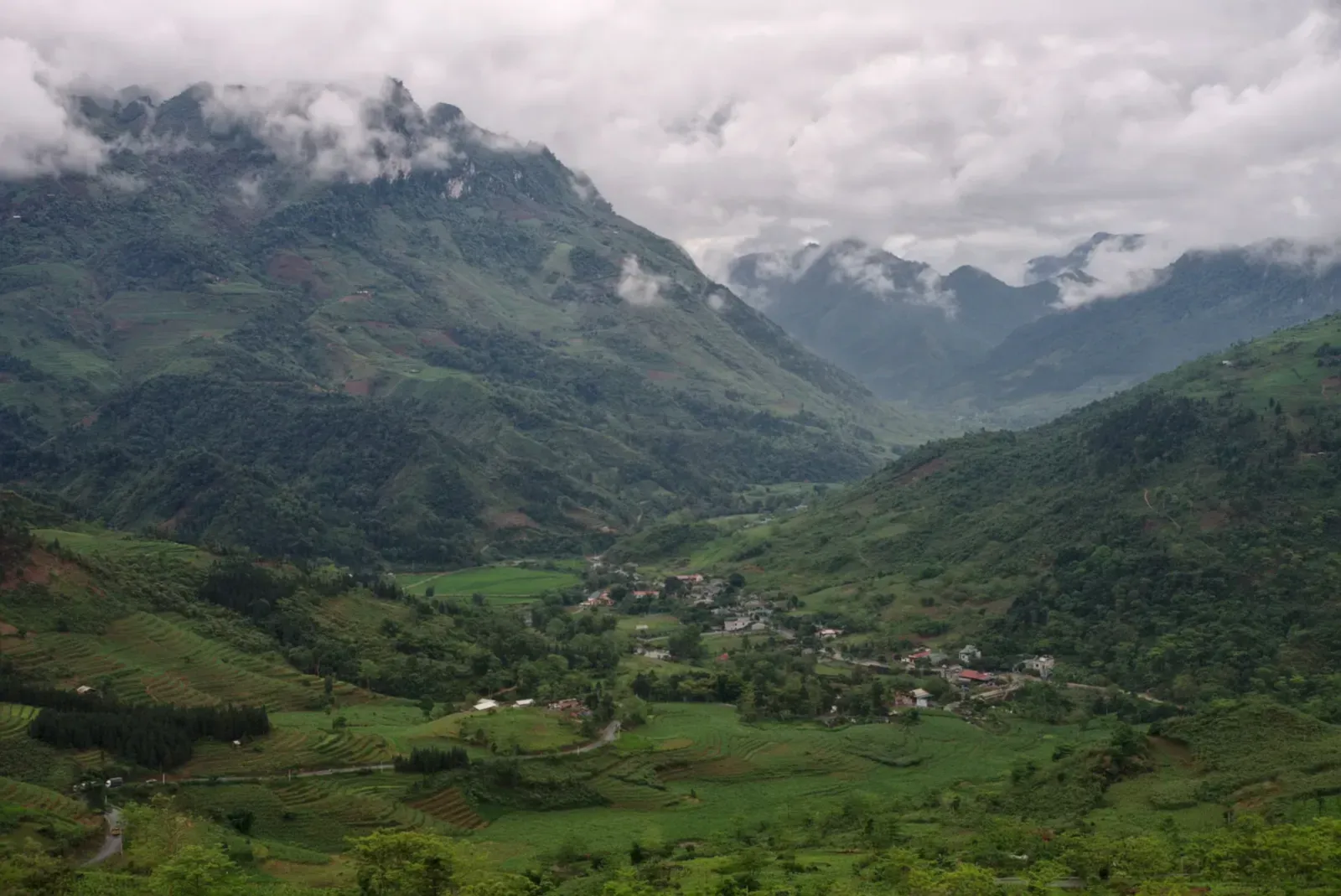
Many travelers chase sea-of-cloud viewpoints hoping for dramatic photos. But for seasoned local drivers, thick pass fog is the single greatest hazard on the mountain road.
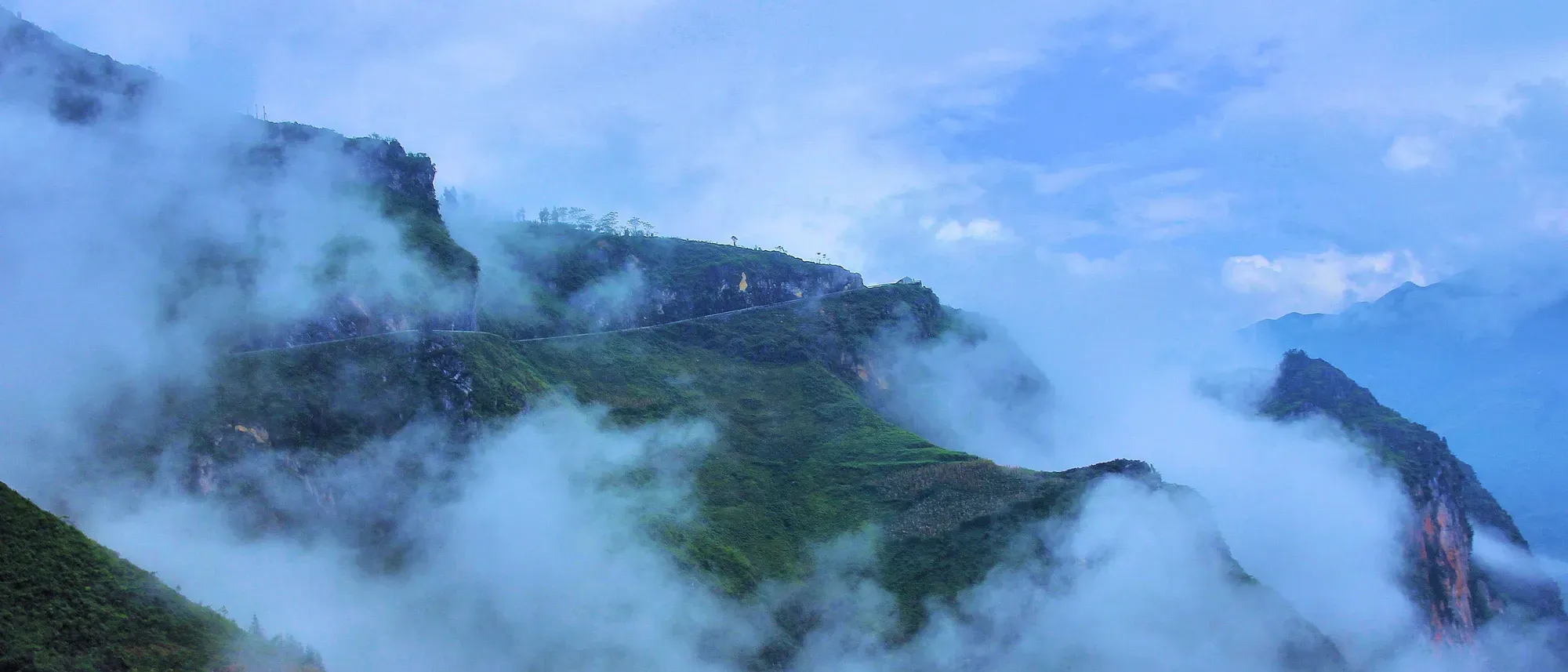
From November through February, persistent fog combines with drizzle to form an invisible, slick film over the asphalt. Visibility drops below 10 metres. Sound gets dampened by dense mist, meaning you cannot hear horns from oncoming timber trucks rounding hairpin blind corners.
Rules for navigating mountain fog safely:
- Yellow auxiliary lighting: White high-beam headlights reflect directly off water droplets, blinding the rider. Taping yellow film over headlights cuts through fog with vastly superior clarity.
- Honk before every blind bend: Your horn is your primary radar when forward vision disappears.
- Track road edge posts and reflective markers: Keep speeds low in second gear; never overtake inside fog banks.
- The 17:30 curfew: Pull off the road and check in by 17:30 at the latest. Riding steep mountain passes after dark in highland fog is a gamble no experienced local will take.
The three-layer packing rule
Many travelers arrive with a single bulky down parka. By noon they are soaked in sweat, struggling to pack the massive coat onto their motorbike rack, only to catch a severe chill when late-afternoon winds strike sweaty skin.
The definitive strategy detailed in our packing guide is the three-layer system:
- Base Layer: A breathable, moisture-wicking synthetic or merino wool tee that keeps skin dry and draws sweat away from the torso.
- Mid Layer: A compact fleece pullover or lightweight down vest that traps warm air without creating excessive bulk in your daypack.
- Outer Shell: A windproof, waterproof hooded jacket (Gore-Tex or treated nylon). This acts as a barrier against gale-force pass winds and cold driving drizzle.
With this three-layer setup, you can strip down to a single layer in sunny valleys, or wear all three when conquering high passes at dusk, staying warm, dry, and in total control.


