Most travellers navigating the northern frontier are familiar with the lively roadside stops along National Route 4C: Pho Bang Town, Tham Ma Slope, or Lo Lo Chai Village. As these hubs adapt to growing visitor footfall, their daily rhythms have naturally evolved to embrace homestays, coffee shops, and tour groups.
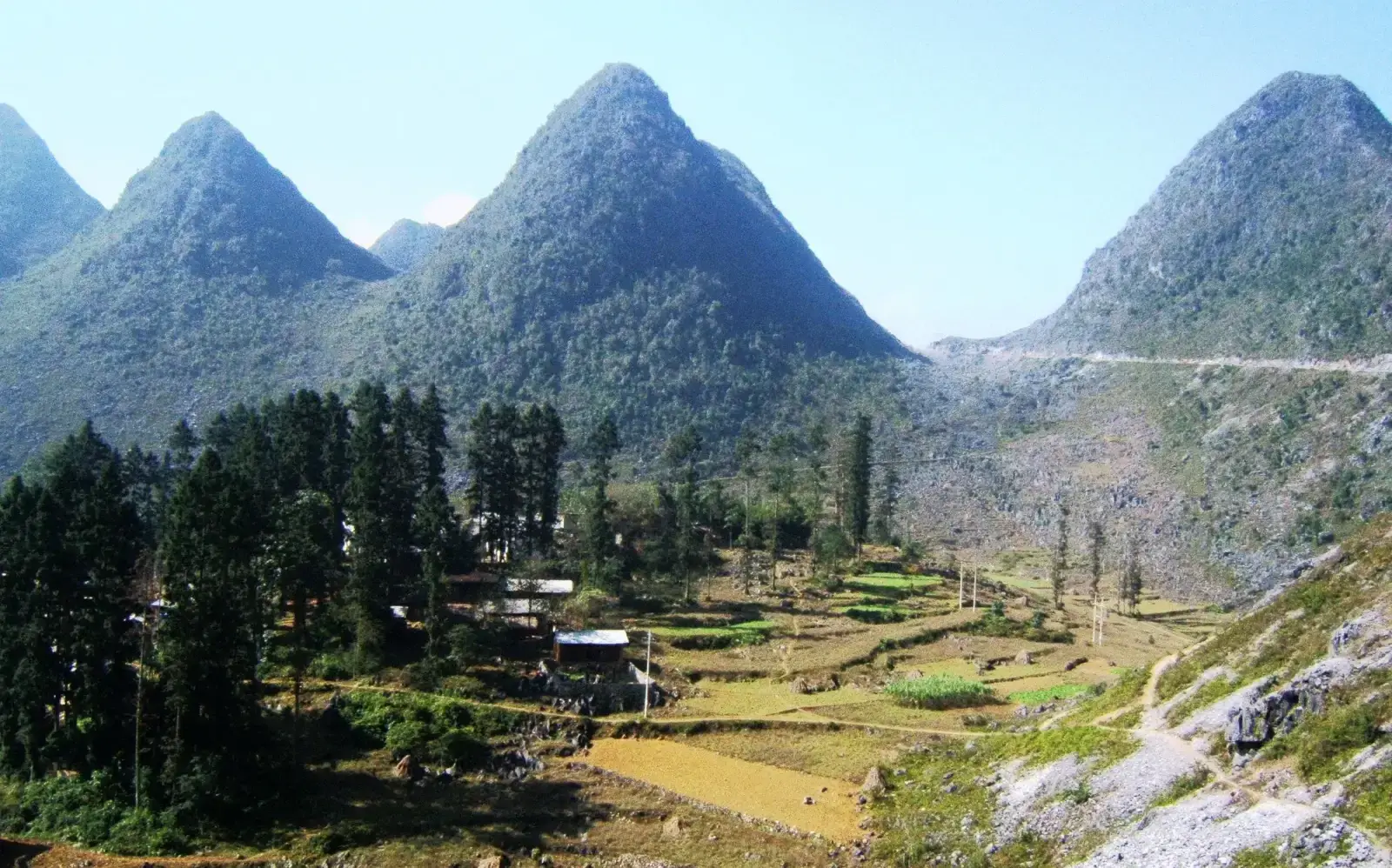
Yet tucked away behind razor-sharp karst ridges, concealed beneath ancient bamboo canopies, or clinging to misty mountain shoulders, Ha Giang still holds settlements that remain entirely untouched by modern commercial tourism. In these secluded hamlets, time flows to an ancient cadence: the soft scrape of handmade corn millstones, the rhythmic clatter of wooden hemp looms, and thin ribbons of woodsmoke drifting from centuries-old rammed-earth homesteads.
As locals raised among these mountains, we share the stories of these quiet communities not to encourage mass foot traffic, but to guide thoughtful travellers who wish to understand the soul of the highlands with deep humility.
Sao Ha: Absolute Stillness Amid the Van Chai Bamboo
Perched at nearly 1,500 metres above sea level in Van Chai commune, Sao Ha village is cradled by towering vertical limestone cliffs and dense primeval bamboo forests.
Reaching Sao Ha requires navigating a narrow, single-track concrete path carved into the mountainside, wide enough only for a single motorbike or walking. The moment you step past the threshold of the hamlet, the roar of passing highway trucks disappears completely. It is replaced by a profound, uncanny silence broken only by mountain breezes rustling through bamboo groves and the occasional rustle of dry leaves underfoot.
Sao Ha is home to Hmong families belonging to the Vang clan. Sturdy rammed-earth homes with thick clay walls stand protected behind intricate dry-stone walls. Every single rock was gathered by hand from surrounding corn fields and meticulously interlocked without a drop of cement or mortar, standing unwavering against freezing winter storms for generations. Life here remains largely self-sufficient: families draw spring water from deep karst caverns, gather around open wood-fired hearths, and grind highland corn on heavy stone mills. The peace here is so delicate that any loud voice or hurried rush feels instantly intrusive.
Lao Xa: Hammered Silver and Ancient Stone Walls
Located several kilometres past the central valley of Sung La along a winding secondary road, Lao Xa craft village feels like an entirely different realm from the busy highway lookouts.
This historic settlement in the Dong Van region is renowned across northern Vietnam as the ancestral cradle of traditional Hmong silversmithing. For generations, master craftsmen of the Mua clan have melted pure silver ingots over charcoal forges, using tiny iron chisels and hammers to shape intricate necklaces, bracelets, and ornamental pendants worn during new year festivals.
In early spring, Lao Xa transforms into a breathtaking visual sanctuary. Centuries-old wild peach and pear trees erupt in delicate pink and white blossoms against the backdrop of moss-covered limestone walls. Standing in a stone courtyard looking up at sheer karst peaks, you experience the seamless harmony between human craftsmanship and an unforgiving alpine landscape.
Xa Phin: Mossy Palm-Thatch Roofs Under Tay Con Linh
While Sao Ha and Lao Xa showcase the stark limestone terrain of the far north, Xa Phin village beneath the western slopes of Tay Con Linh reflects an entirely different ecosystem: a world of rolling mist, primeval forests, and ancient herbal traditions.
This ancestral village of the Dao Cham minority sits above 1,000 metres elevation, where thick cloud banks blanket the slopes throughout much of the year. The defining signature of Xa Phin is its cluster of traditional wooden stilt houses roofed with dozens of layers of broad palm thatch. Decades of heavy rainfall and perpetual high humidity have transformed these thatch canopies into living carpets of vibrant emerald-green moss, occasionally dotted with tiny wild ferns.
Daily life here is intertwined with ancient Shan Tuyet tea trees, some standing tall for over two centuries. Tender morning tea leaves are harvested from towering branches and pan-roasted by hand over wood fires, yielding an intoxicating fragrance of wild mountain honey and hearth smoke. The air in Xa Phin is cool, clean, and deeply restorative.
Thien Huong: Living Heritage by the Border River
Situated roughly seven kilometres outside Dong Van town, the ancient hamlet of Thien Huong sits quietly on a hillside overlooking the tranquil waters of the border river.
The first sight greeting travellers arriving in Thien Huong is an imposing grove of banyan trees standing at the entrance of the village, their sprawling aerial roots sheltering a sacred shrine dedicated to the forest spirit. The village is an ancient settlement of the Tay and Giay people, characterized by spacious two-storey earthen houses roofed with weathered yin-yang tiles.
Thien Huong is celebrated across the plateau for its traditional leaf-yeast corn wine. Village women venture deep into surrounding valleys to harvest over thirty distinct medicinal herbs and wild leaves, drying and pounding them to create fermentation yeast. The wine is distilled slowly in earthen pots, creating a mellow, fragrant spirit that warms the body without causing morning headaches. In the soft light of late afternoon, as twilight reflects off ancient tiles and the scent of warm yeast drifts through narrow alleys, the frantic pace of the outside world melts away.
Why We Practice Anti-Geotagging
Travellers frequently ask why Ha Giang 23 does not publish clickable Google Maps pins or exact digital coordinates for private homes in Sao Ha, Lao Xa, or Thien Huong.
Our refusal is rooted in deep respect for the communities who call these mountains home. In recent years across Southeast Asia, dozens of tranquil rural enclaves have been degraded almost overnight following viral social media exposure. When precise pins are broadcast indiscriminately, hundreds of motorbikes flood peaceful dirt lanes, plastic waste accumulates along heritage stone walls, drones buzz over private courtyards, and local children are pressured into begging for candy.
We choose instead to describe geographic districts and encourage travellers to explore on foot, hire experienced local guides, or seek directions directly from village elders. The finest travel experiences cannot be summoned with an automated GPS pin: they require patience, effort, and authentic human interaction.
How to Visit With Humility and Respect
When stepping past the entrance of an ancient hamlet, remember that you are a privileged guest in a sacred living community. Always honour our core guidelines in accordance with the visitor pledge:
- Walk gently and speak softly: Keep voices low, turn off portable speakers, and never rev motorbike engines inside village paths. Allow the natural quiet of the mountains to speak for itself.
- Never hand out cash or sweets to children: This is an urgent plea from highland teachers and community elders. Distributing candy or pocket change encourages truancy, fosters dependency, and harms children’s health. If you wish to contribute, donate notebooks or medical supplies directly to commune schools or local clinics.
- Respect household privacy: Always smile and ask for permission before taking photographs of village elders or women at work. Never enter family living quarters, bedrooms, or sacred ancestral altar rooms without an explicit personal invitation.
- Depart before nightfall: Plan your itinerary to leave remote hamlets before 5:00 PM. Twilight is the private hour when families gather around wood-fired hearths to share dinner after demanding field labour. Return the village to its rightful peaceful evening solitude.
Ha Giang’s true grandeur lives not only in its dizzying passes, but in the quiet dignity of its secluded villages. Travel slowly, tread lightly, and help ensure that these ancestral communities remain pristine for generations to come.
If you would like to visit places like these with someone who knows them, see Ha Giang off the beaten path.


