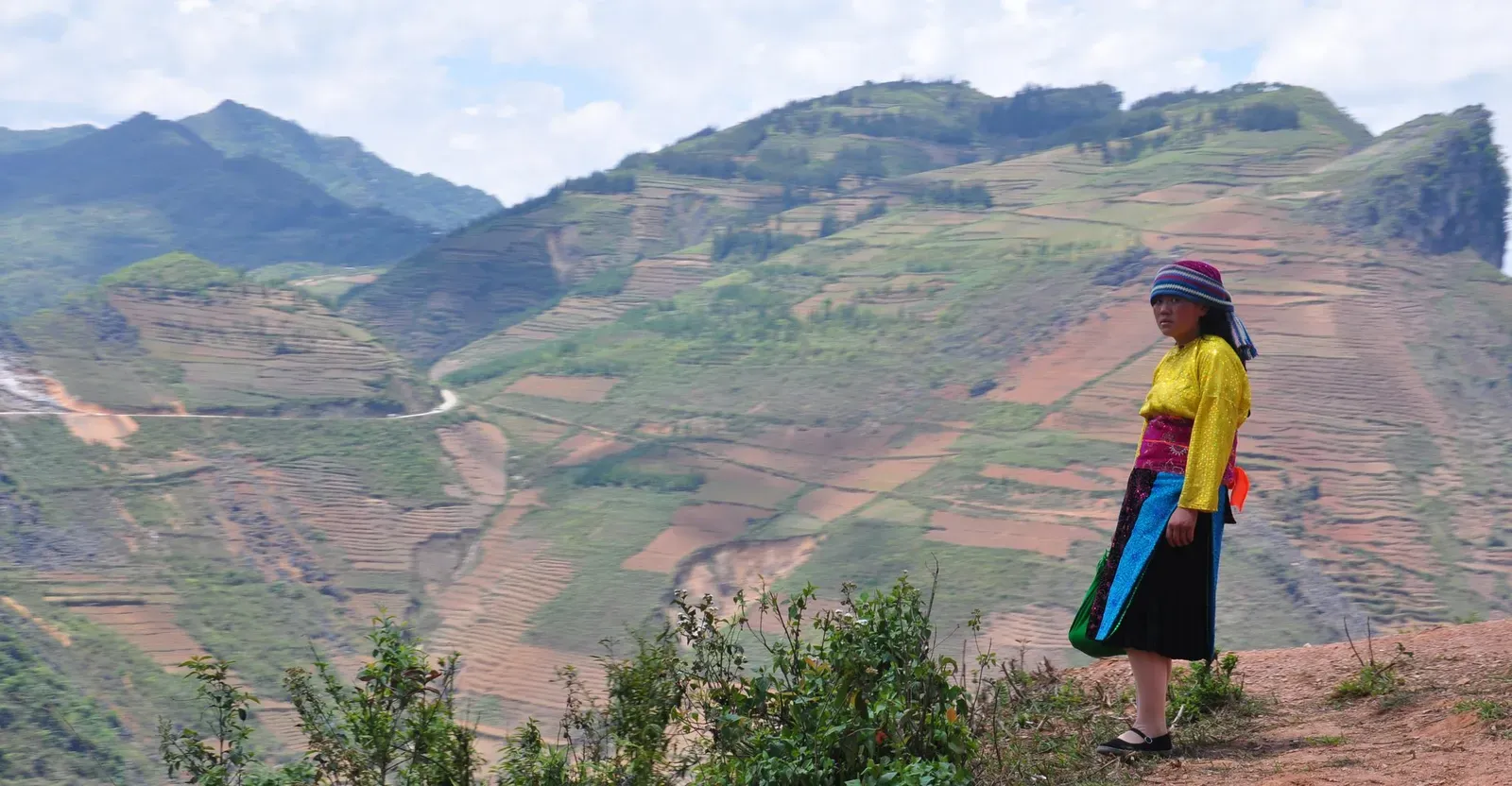
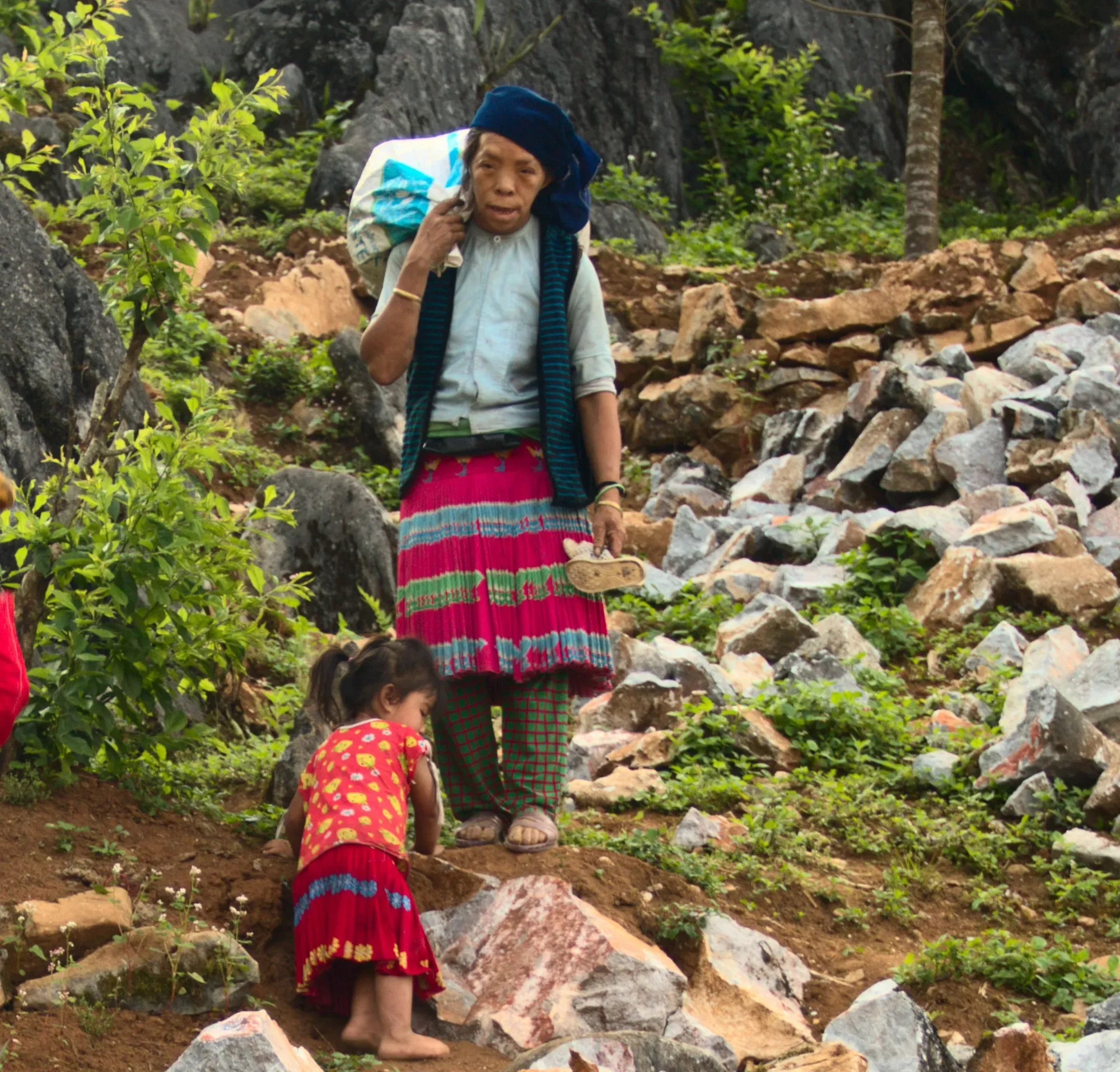
Look down from a mountain pass across Quan Ba, Yen Minh, Dong Van, and Meo Vac, and you will see a sea of grey limestone ridges rolling towards the horizon. In this seemingly inhospitable desert of rock, earthen houses tuck into sheltered hollows, patches of emerald corn spring from hairline crevices, and colourful pleated skirts flutter like highland butterflies.
This is the homeland of the Hmong, the resilient people who transformed a harsh highland frontier into their ancestral home over three centuries of mountain settlement.
Why the Hmong chose the high rocky ridges
Travelers riding the Loop often wonder: while the Tay and Thai settled fertile river valleys to cultivate wet rice, why did the Hmong choose steep karst crags standing well above 1,000 metres?
Historical migrations pushed early Hmong settlers high into the northern mountains. Yet once rooted among the mist and crags, the Hmong ceased seeing limestone as an obstacle. Instead, the rock became a fortress and an enduring partner: “Living on stone, dying buried in stone”.
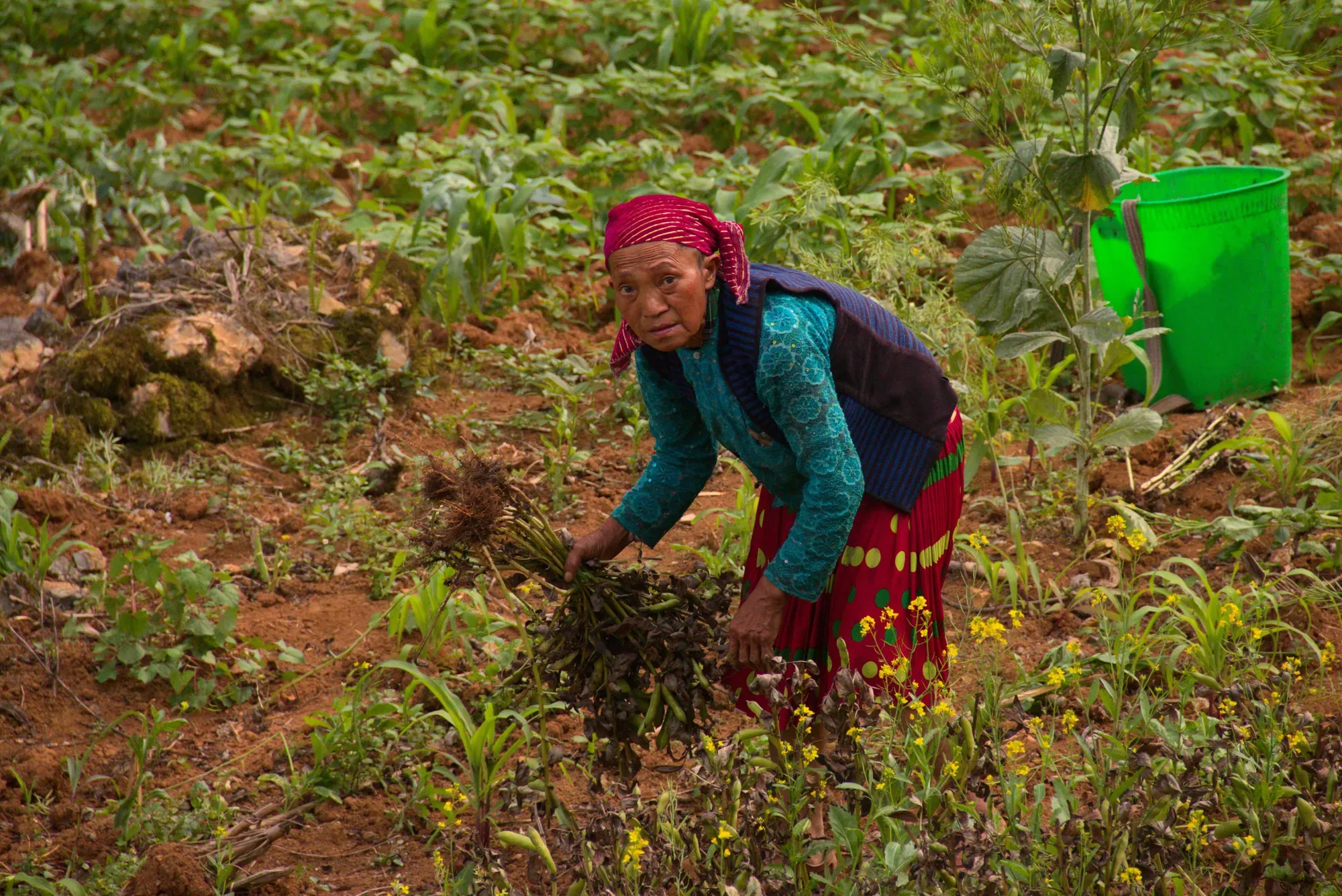
They learned to chisel planting pockets into boulders, built tiny terrace berms to hold fertile runoff soil, and gathered jagged rocks from their fields to construct dry-stone walls of remarkable ingenuity.
Dry-stone fences: balance without a drop of mortar
Riding through old hamlets such as Lo Lo Chai or the valley of Sung La, you will notice the stone boundary walls enclosing each rammed-earth homestead.
There is no mortar, concrete, or adhesive. Every jagged piece of weathered limestone is selected by eye and placed by bare hands. Heavy cornerstones anchor the foundation, flat slabs build the body, and small wedges lock the gaps into place. A single wall encircling a courtyard can take months or even an entire winter to complete.
These walls keep farm animals out of kitchen gardens and blunt the piercing winter gales. Yet more impressively, after decades of monsoons and summer heat, the fences still stand straight, draped in a quiet coat of green lichen.
The hemp skirt: 41 stages of patient craftsmanship
If stone walls represent the resilience of Hmong men, hemp weaving is the soul of Hmong women.
At the Lung Tam Linen Cooperative, you can watch grandmothers and young mothers peeling fine strips of dried hemp bark. In Hmong cosmology, hemp thread links the living with ancestral spirits. When a person passes on, wearing traditional hemp ensures ancestors recognise their kin.
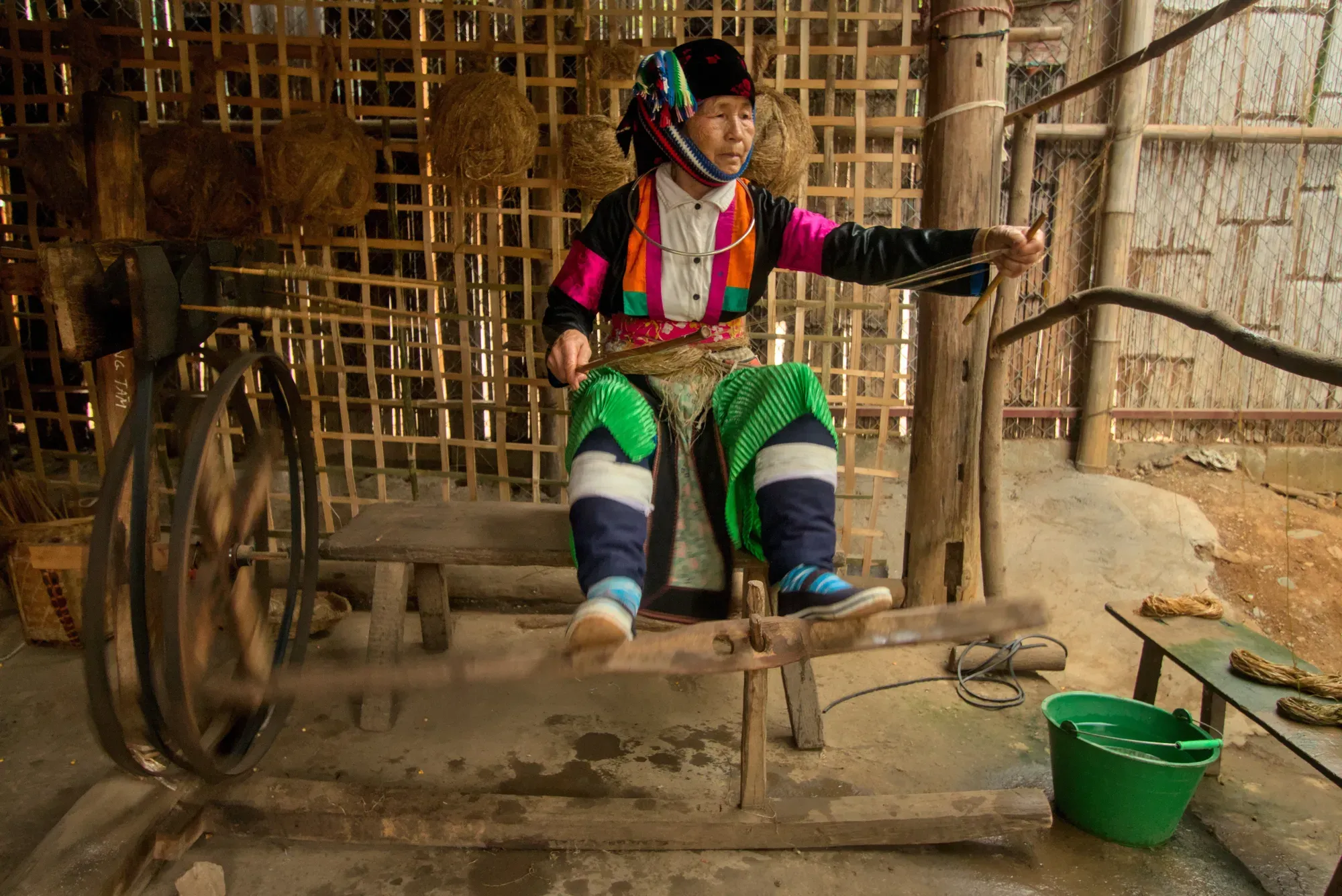
Creating a single pleated skirt demands immense patience:
- Harvested hemp stalks are dried, stripped, and pounded to soften the fibres.
- Thread sections stretching thousands of metres are joined by hand without bulky knots.
- Fibres are boiled repeatedly in wood-ash water to bleach them naturally.
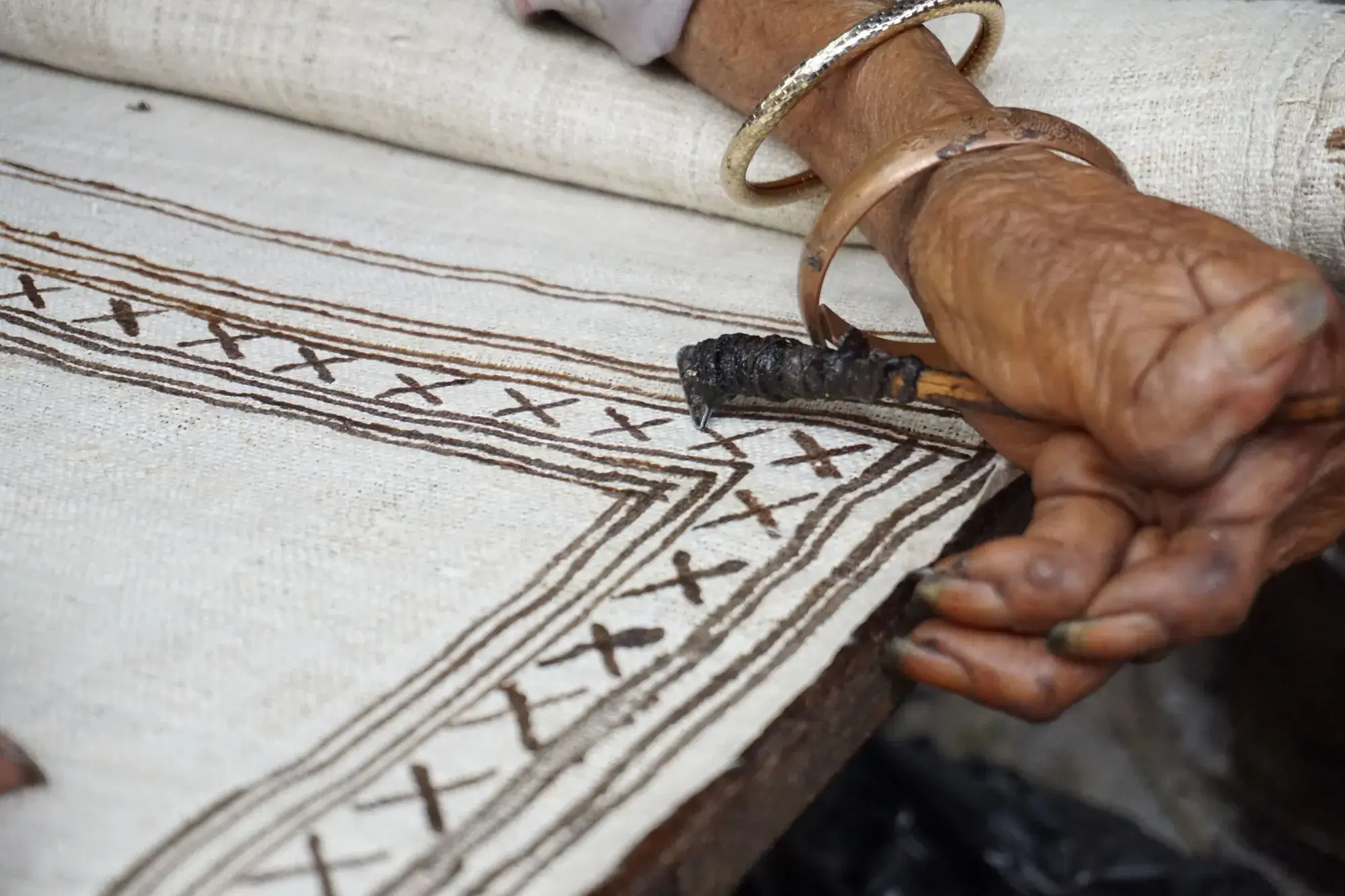
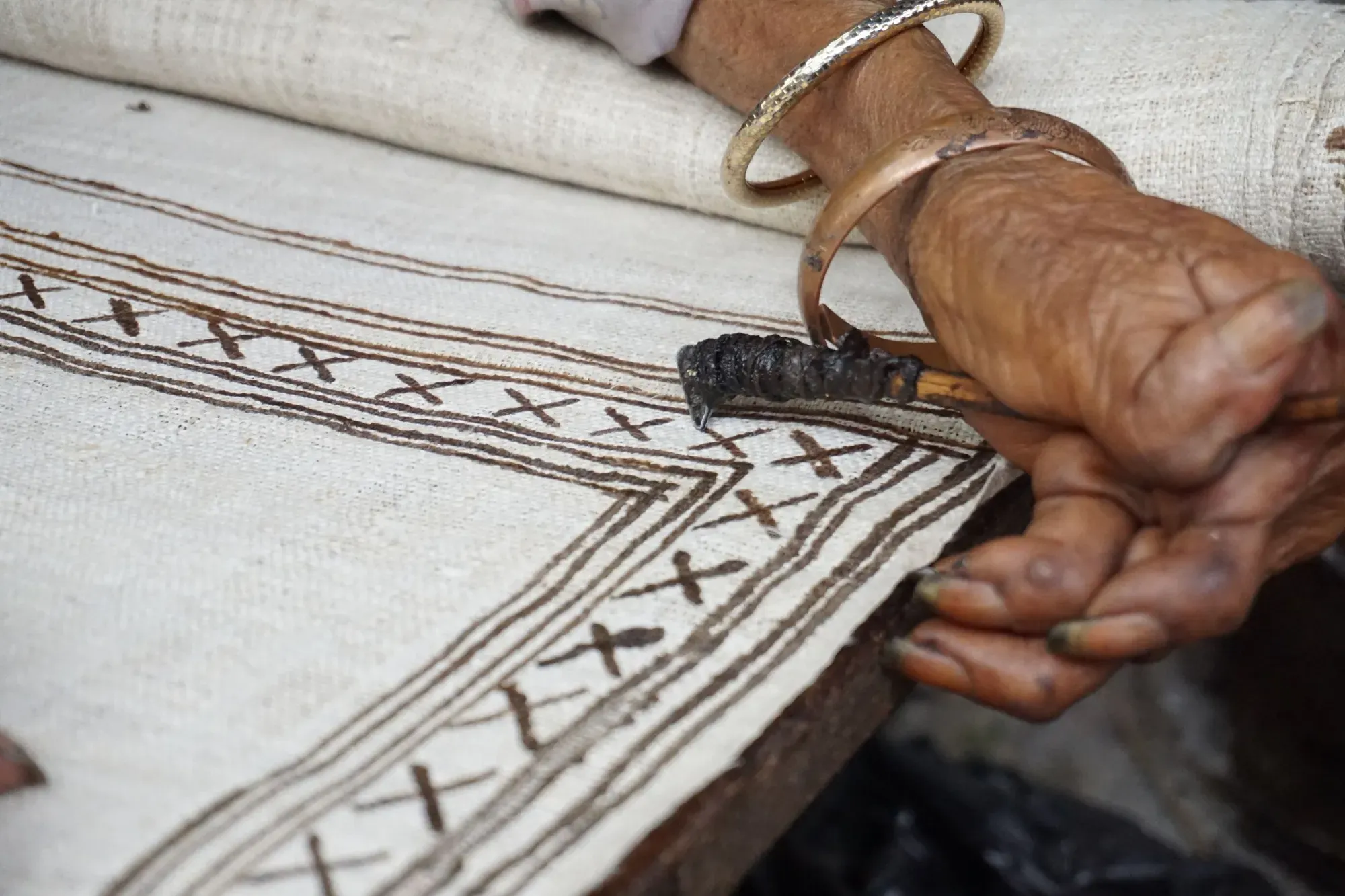
- The cloth is woven on narrow backstrap looms and decorated with melted beeswax patterns using tiny copper pens.
- Repeated dips in natural indigo vats yield an inky, dark-blue sheen with subtle purple undertones.
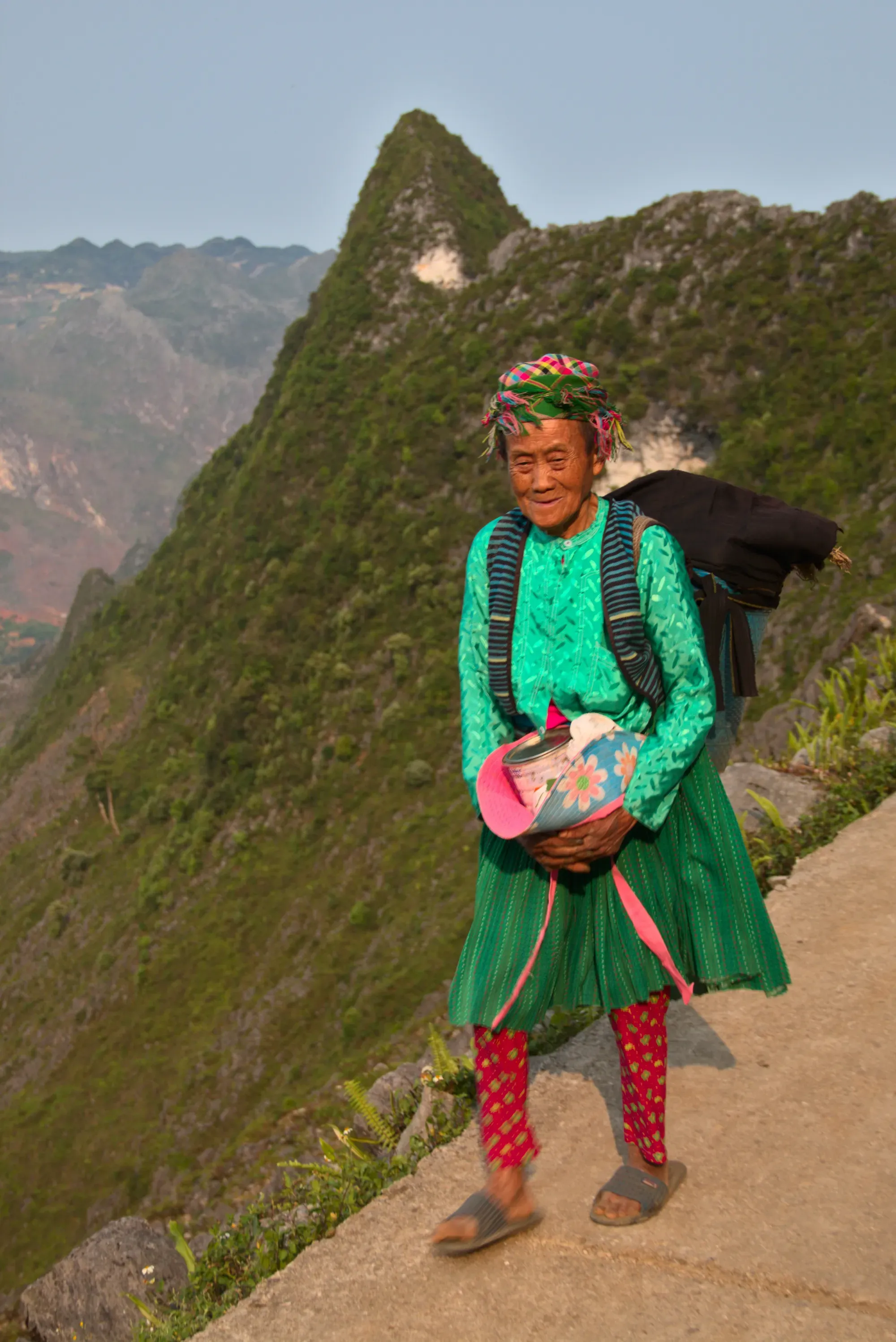
A finished hemp skirt is remarkably durable, acting like body armour against forest thorns while trapping crucial warmth during sub-zero winter nights.
Etiquette when visiting highland villages

Hmong communities are welcoming, but their domestic spaces carry traditions that visitors should honour:
- The hearth and the central pillar: The central fire is guarded by the hearth spirit; never step onto the iron trivet or prop feet toward elders. The main wooden post houses ancestral guardian spirits; avoid leaning against it or hanging clothes upon it.
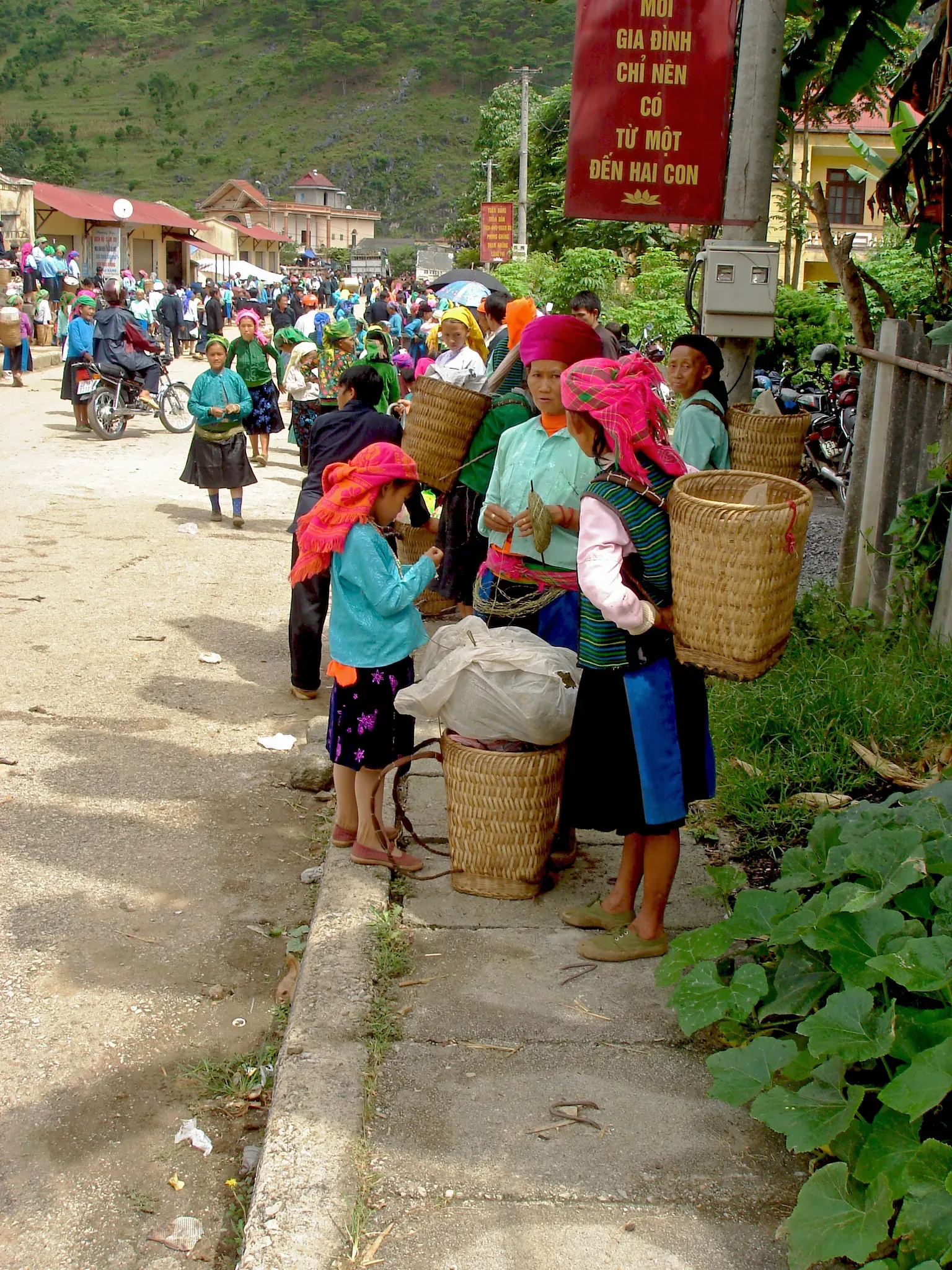
- Photos and children: At markets or hamlet paths, ask with a polite nod and smile before snapping portraits. Never hand cash or packaged sweets to young children on the road — this encourages begging, damages oral health, and pulls kids away from school.
- Entrances and doorways: The central door is reserved for guests of honour and ceremony. Women traditionally use the side door; travelers should wait for an invitation before stepping across the threshold.


