If you have ever spent a long, shivering day in the saddle wrestling switchbacks over Ma Pi Leng Pass in the damp November mist, you know that singular relief when you finally step through the thick wooden doorway of an ethnic earthen house in Dong Van or Meo Vac.
Inside, beside a sunken stone hearth glowing with oak embers, your host fills a small porcelain cup with a clear liquid that looks just like mountain spring water. The silver-haired Hmong elder, his palms weathered and calloused from decades of limestone farming, raises the cup with both hands and looks directly into your eyes with an honest, gentle smile.
That quiet second is the beating heart of northern Vietnam.
Yet in recent years along the Loop, you will constantly witness packed hostel bars and adrenaline-fueled motorbike groups passing around unlabelled twenty-litre white plastic jerrycans, chanting drinking games and hollering a single phrase: “Happy Water”. For many travellers, downing shot after shot has become a cheap trophy, a party badge to brag about after surviving a day on high mountain ledges.
For those of us who grew up here on the stone plateau, seeing that display brings a bittersweet sigh.
The “Happy Water” Nickname and the Downside of Party Tourism
Nobody knows which foreign backpacker first coined the phrase “happy water”. It is easy to see how it caught on: shared family-style dinners around long wooden tables, the icy mountain chill outside, and a warming toast that instantly dissolves travel exhaustion and turns total strangers into lifelong friends.
However, the rapid commercialization of that nickname has unintentionally flattened a sacred cultural heritage into a binge-drinking novelty.
Worse, to satisfy high demand for cheap, endless alcohol from rowdy group tours, some roadside establishments began purchasing cheap industrial ethanol brewed with chemical yeast from lowland factories. That harsh, adulterated liquor burns your throat, causes uncontrollable drunkenness, and leaves travellers the following morning with blinding migraines, blurred vision, and burning thirst.
That is not Ha Giang corn wine.
Born from Flint Corn Grown in Limestone Cracks
To understand why highland people revere every drop of corn wine, you must look closely at the jagged grey karst canyons of Quan Ba, Yen Minh, Dong Van, and Meo Vac.
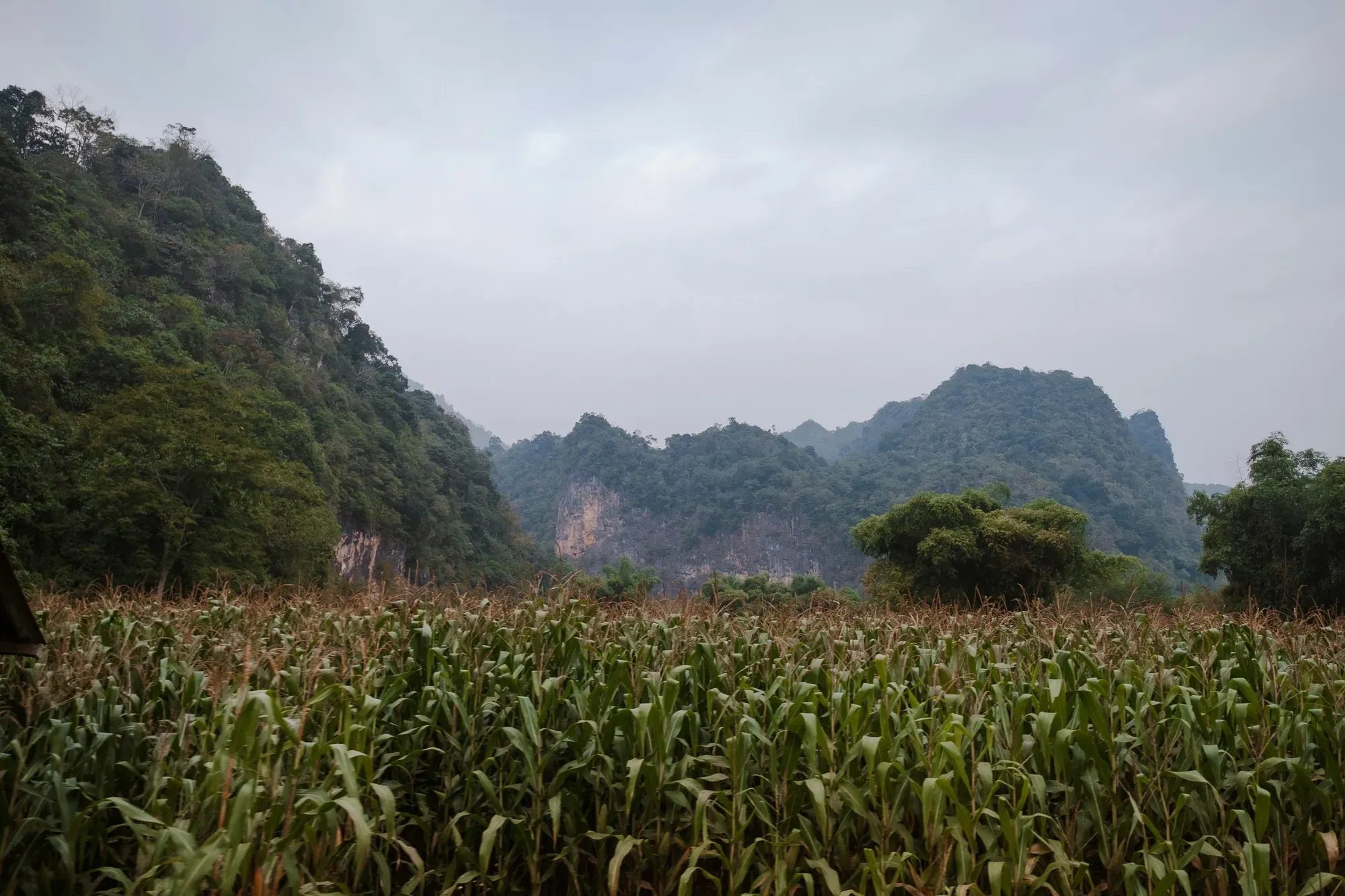
There is no flat river delta here. Standing fresh water is so scarce that local families must harvest rainwater drops from clay-tiled roofs or walk miles into deep gorges with plastic canisters strapped to their backs. Arable soil exists only in tiny pockets trapped between needle-sharp limestone crags.
Yet the corn grows.
Hmong farmers carry woven baskets of dark humus soil on their shoulders up cliff paths, planting hard yellow flint corn seed by seed into the rock. Enduring winter frosts, scorching summer droughts, and violent mountain hailstorms, the stalks ripen into hard, amber-gold ears.
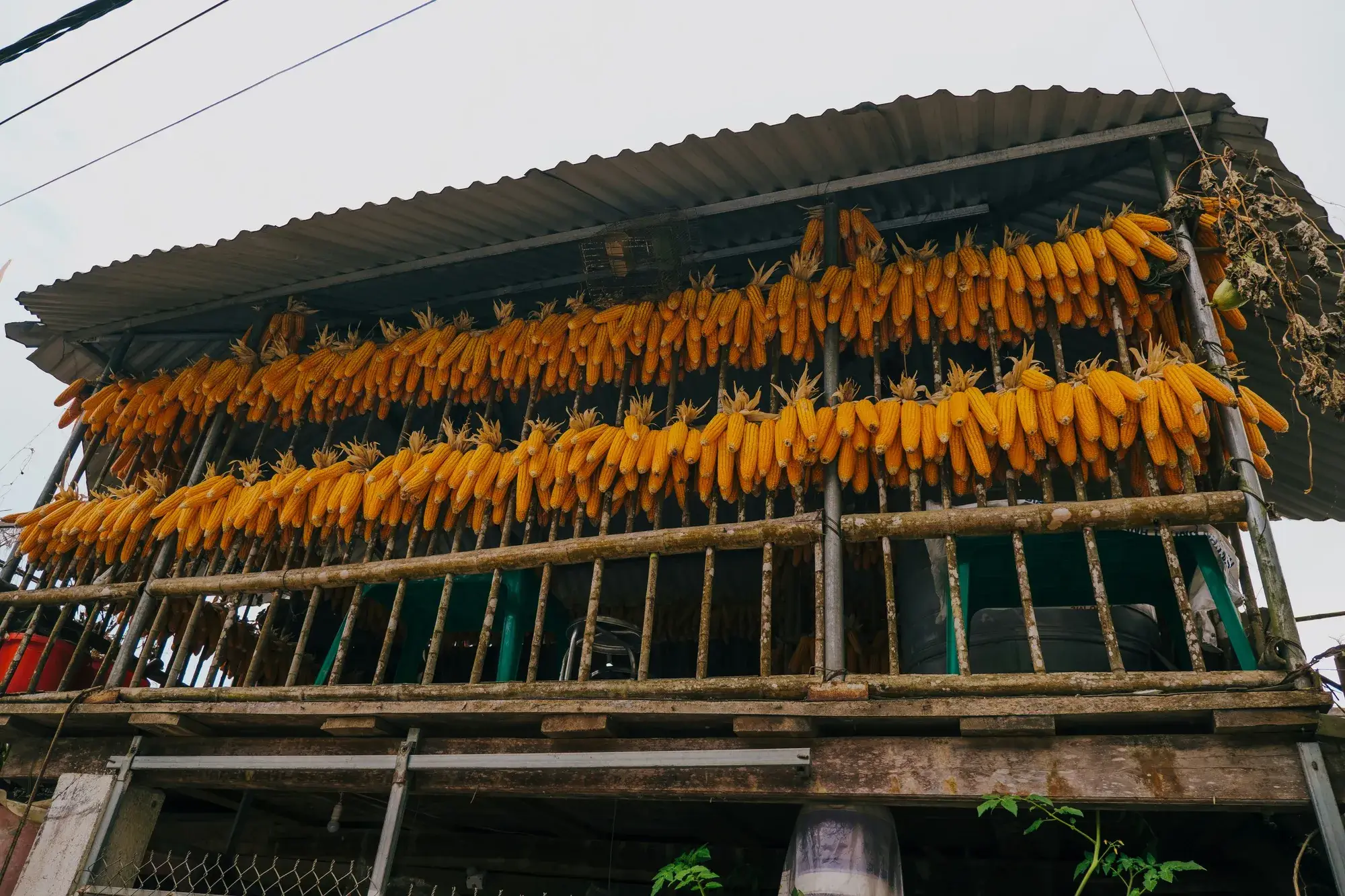
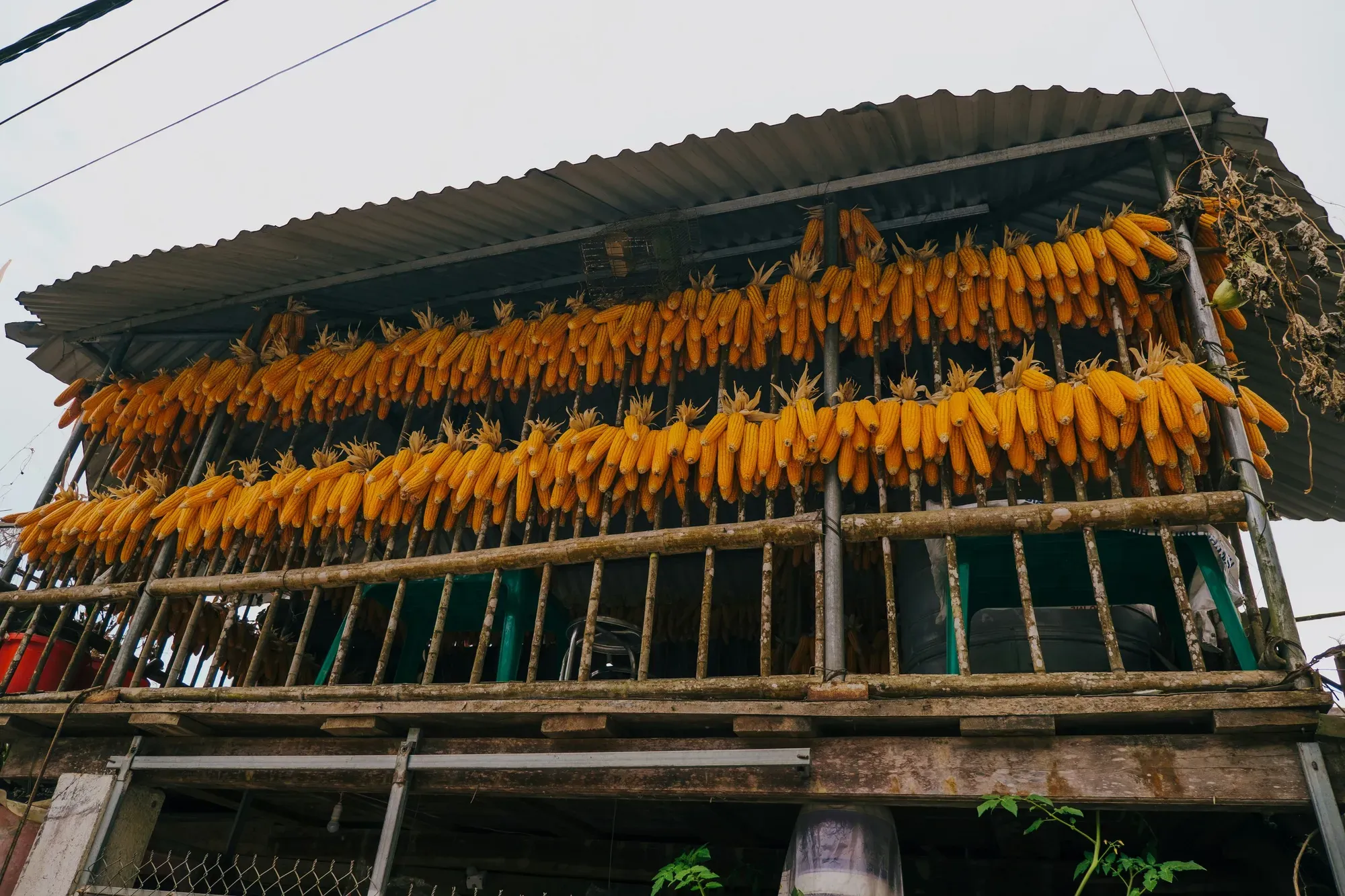
Corn is the sacred crop that has sustained human life on this frontier for centuries. Ground into coarse flour, it becomes daily men men; the dried stalks feed mountain cattle through freezing winters; and the finest kernels are saved and hung from smoky kitchen rafters for months to distill traditional wine.
A single pot of authentic corn wine represents an entire season of back-breaking manual labor on steep cliff edges.
The Secret of Thirty Wild Mountain Herbs
Corn wine is distilled across several northern provinces, but corn wine from Ha Giang—specifically from Pho Bang old town, Sa Phin, and Can Ty—carries an unmistakable profile found nowhere else. The entire secret rests in the wild herbal yeast cake (men la).
Highland women never use commercial factory yeast. Instead, they trek deep into old-growth forests on high limestone massifs to harvest more than thirty wild herbs, roots, and mountain barks:
- Wild forest lemongrass, mountain cinnamon bark, star anise, and cardamom pods: creating a warm, sweet, forest-like aroma.
- Herbal vines, mountain ginger, dried citrus peel, and fern leaves: providing antibacterial protection and a lingering, nutty sweetness.
- Secret highland roots: known only to village elders, traditionally used to ease bone pain, prevent colds, and protect the stomach against alpine chills.
These botanicals are dried on bamboo racks, ground into fine herbal powders, kneaded with millet flour, and hand-rolled into small yeast balls resembling wild bird eggs. The yeast cakes are nestled under sweet dried straw for weeks until they bloom with fine white medicinal mold and release a fragrant, earthy aroma.
Meanwhile, boiled flint corn kernels are spread across wide bamboo trays to cool, then tossed by hand with crushed herbal yeast. The mixture ferments slowly inside sealed ceramic stoneware jars for twenty to twenty-five days beside the warm kitchen hearth.
Only when the fermented mash smells sweet and honeyed is it transferred into wooden barrel stills over roaring wood fires, cooled with pure cold mountain spring water to catch the very first crystal-clear drops.
Comparison: Traditional Herbal Corn Wine vs Commercial “Happy Water”
To protect your health and your trip, keep this comparison in mind whenever you are offered a drink:
| Feature | Authentic Herbal Corn Wine (Ruou Ngo Men La) | Cheap Commercial “Happy Water” |
|---|---|---|
| Appearance | Crystal clear like mountain spring water; fine, persistent bubbles form when gently shaken | Often slightly cloudy or flat; bubbles vanish instantly |
| Aroma | Sweet, nutty toasted corn combined with fragrant wild forest herbs and forest moss | Pungent, harsh, rubbing-alcohol odor that burns the nostrils |
| Palate | Remarkably smooth; gentle, soothing heat spreads outward from your chest | Harsh burn in the throat; sharp chemical sting and unpleasant bitterness |
| Finish | Long, sweet, herbal finish at the back of the tongue | Sour, flat, or metallic chemical aftertaste |
| Next Morning | Clear head, light body, zero nausea, and no unquenchable thirst | Pounding headache, bloodshot eyes, nausea, and deep fatigue |
| Alcohol Content | Naturally settles between 25% and 30% ABV | Often watered down or spiked artificially above 40% with industrial alcohol |
Highland Toasting Etiquette: A Bond of Trust
In traditional Hmong and Dao communities, raising a cup has never been about peer pressure or drinking someone under the table.
When winter temperatures drop below 5 degrees Celsius (41 degrees Fahrenheit) and howling north winds rattle the wooden rafters, a cup of herbal corn wine is practical medicine that keeps your blood moving and breaks the deep isolation of the mountains.
When a local host raises a cup to you, they are opening their home and welcoming you as family. They drink to wish you safe passage over treacherous cliffs, to celebrate good corn harvests, and to bless your family back home.
Respectful Highland Etiquette:
- Accept with both hands: Whether it is a small cup or a shared earthenware bowl, always receive it with both hands, look your host in the eyes, and offer a warm nod.
- Take small, measured sips: You are never required to down the whole cup at once (“one hundred percent”). Take a polite sip to taste the herbs, leave some in the cup, and set it down comfortably.
- Return the blessing: Offer simple, sincere words of gratitude: wishing health for the elders, happiness for the children, and good crops on the mountain.
How to Decline Politely Without Causing Offense
If you do not drink alcohol, have a sensitive stomach, or must ride early the next morning, you can decline with ease and grace:
- Do not abruptly wave your hands or push the cup away: Waving your hands dismissively when someone offers you their finest homemade craft can feel cold or unappreciative.
- The polite way to decline: Accept the cup gently with both hands, hold it near your heart, smile, and say clearly: “Cam on bac rat nhieu. Mai toi phai lai xe som, xin phep cho toi nhap moi chuc suc khoe gia dinh.” (Thank you so much. I must drive early tomorrow, so please allow me just to touch my lips to wish your family good health).
- Ask to toast with hot tea: You can always ask for a steaming cup of wild Shan Tuyet green tea or hot broth to join the toast. Highland people are deeply generous; when they see that you are sincere and prioritizing safety, they will never pressure you.
Life or Death: The 0.0% Alcohol Law and Honest Advice
This is the most critical reality every traveller must understand before embarking on the Ha Giang Loop.
Under Vietnamese traffic law (Decree 100/2019/ND-CP and national road safety regulations), the legal blood alcohol concentration for operating any motor vehicle is strictly 0.0%. Traffic police checkpoints operate systematically around Ha Giang Town, Yen Minh, and Dong Van, frequently testing riders early in the morning.
Fines for driving a motorcycle with any detectable alcohol reach up to 8,000,000 VND (around 320 USD), alongside licence suspension up to 24 months and vehicle impoundment (review our complete guide on licences and regulations).
Yet losing money or having your bike impounded pales in comparison to the risk to your life.
The Ha Giang Loop features narrow mountain shelves with no guardrails, sudden patches of loose gravel, wandering water buffalo, and vertical drops falling hundreds of metres into limestone ravines. Even minor hangover grogginess or delayed reflexes from the night before can turn fatal in a split second (read our vital guide on road safety on the Loop).
A Relaxed Alternative for Families and Groups
If you are travelling with family, older companions, or friends who want to experience intimate village dinners, taste authentic herbal corn wine, and wake up completely rested without the terror of riding sheer switchbacks, the wisest choice is to hire a car with a licensed local driver.
Experienced mountain drivers know every twist in the mist, stay 100% sober, and ensure your entire group journeys through the highlands safely and comfortably.
Frequently Asked Questions About Ha Giang Corn Wine
What is the alcohol content of authentic Ha Giang corn wine?
Traditional handmade corn wine generally ranges between 25% and 30% ABV. Some small-batch distillers produce versions around 35%, but thanks to the wild herbal yeast, the mouthfeel remains smooth and gentle without burning the chest.
Where can I buy authentic herbal corn wine as a gift?
The most renowned traditional distilling communities are in Pho Bang old town, Lung Phin commune, and Can Ty. Look for small family-run stills or visit early morning Sunday markets. Avoid purchasing unlabelled plastic jugs sold beside crowded tourist photo stops.
Does real corn wine truly not cause hangovers?
Real herbal corn wine distilled carefully from whole corn and aged for three to six months minimizes harsh fusel oils and aldehydes, significantly reducing headache risks compared to industrial spirits. However, excessive consumption beyond what your body can metabolize will still dehydrate you and cause fatigue. Moderate, respectful sipping is the only true rule.
Can international travellers pack corn wine in airline luggage?
Under international aviation security standards and Vietnamese airline regulations, alcoholic beverages between 24% and 70% ABV are permitted inside checked luggage (up to 5 litres per passenger), provided they are securely packed in sealed, break-resistant containers. They are strictly prohibited inside carry-on baggage.
Ha Giang greets you with soaring stone fortresses, but it wins your heart through the quiet warmth of its people. Treat their craftsmanship with the respect it deserves, drink thoughtfully, and keep a clear head so you can truly feel the magic of these mountains.


