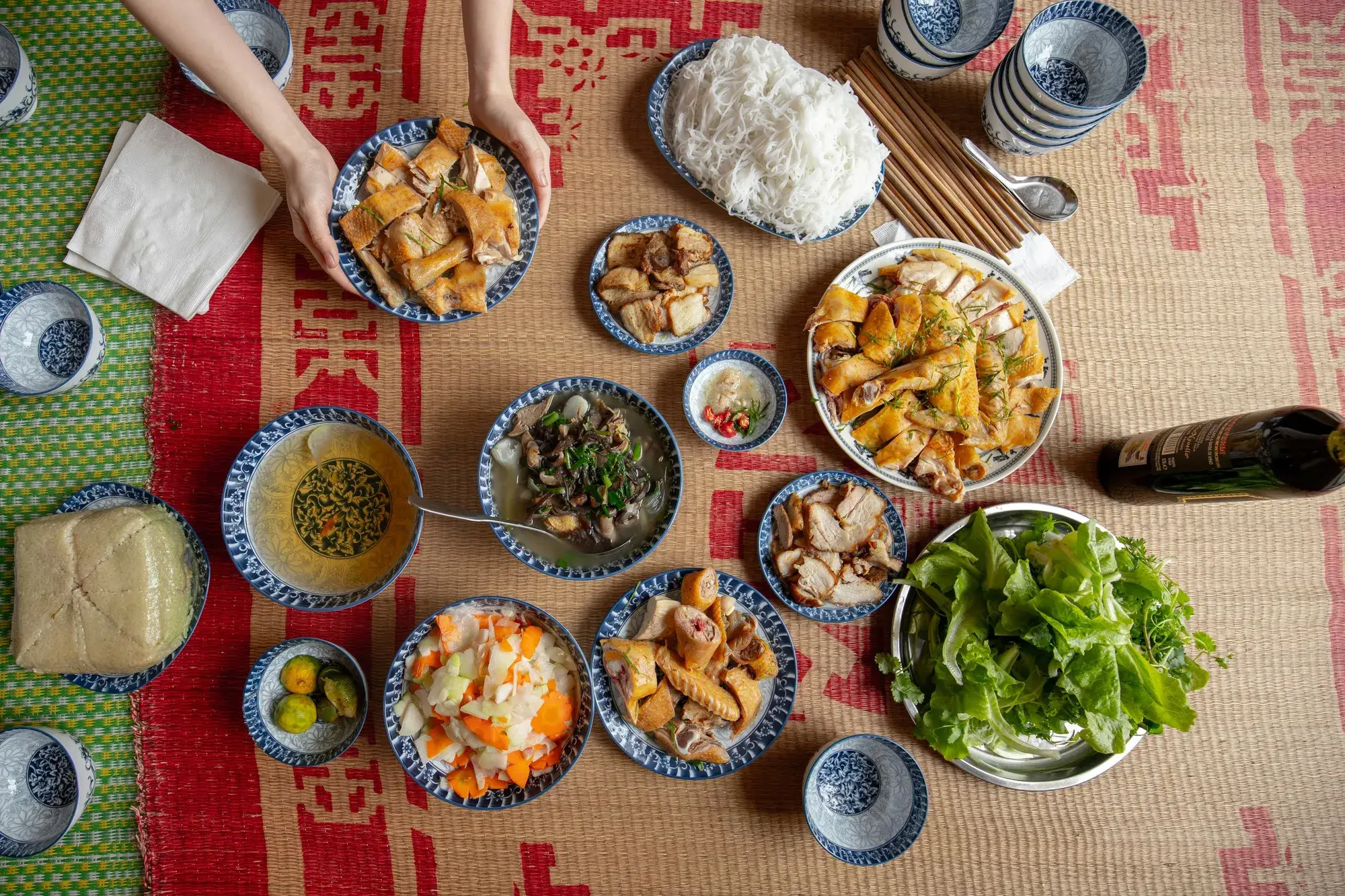
Most travellers come to Ha Giang chasing adrenaline: soaring limestone canyons, treacherous hairpin switchbacks, and the sweeping ribbon of the Nho Que River. Yet when visitors return home and reminisce about their journey, the memories that linger longest are often tied to wooden benches, wood-fired hearths, and the aroma of rustic mountain cooking.
Northern highland gastronomy is unlike anything you will eat in Hanoi, Hue, or Ho Chi Minh City. Down in the deltas, Vietnamese cuisine relies on fresh river herbs, fish sauce, rice noodles, and delicate sweetness. Up here on the limestone frontier, life has historically been hard, rocky, and freezing cold. The food reflects that resilience: it is hearty, warming, heavily spiced with wild mountain herbs, and engineered to sustain farmers working near-vertical cornfields.
If you are curious about what to order in roadside stalls and village homestays, here is our honest, dish-by-dish guide from those of us who grew up eating at these tables.
1. Pho Trang Kim: The Legendary Mountain Breakfast Under Bac Sum Pass
If you depart Ha Giang City in the early morning, the undisputed breakfast milestone for local drivers and road riders is Trang Kim hamlet (Dong Ha commune, Quan Ba district), situated right along National Highway 4C below Can Ty Pass, beside the clear turquoise waters of the Mien River.
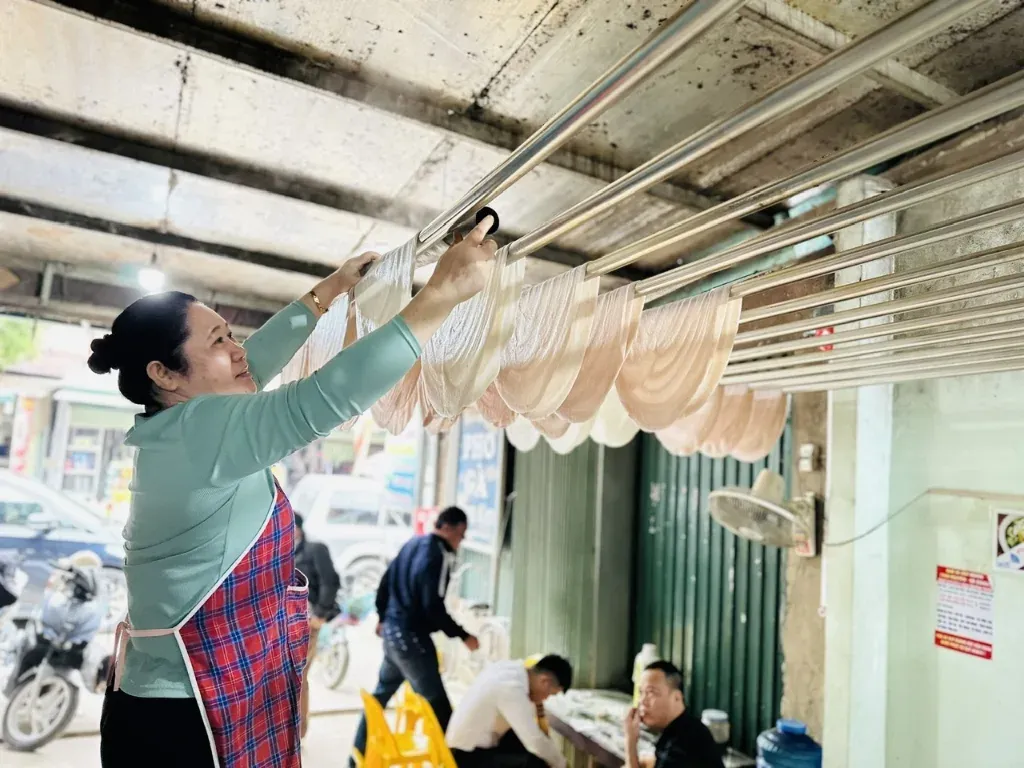
Pho Trang Kim is fundamentally different from urban pho in Hanoi or Nam Dinh. Here, the flat rice sheets are made entirely by hand from upland rice soaked overnight, ground on stone mills, and steamed on boiling water vats fired by mountain firewood. The resulting noodle sheet is thick, tender, and naturally springy without artificial starch additives or preservatives. Once steamed, each wide sheet is draped over long bamboo drying racks hung beneath shop eaves to cool in the morning mountain breeze before being hand-cut into wide ribbons.
The chicken broth is simmered with free-range hill chicken from Hmong mountain farms, served with firm, golden skin that snaps pleasantly with every bite. The stock is fragrant with forest ginger and wild cardamom, finished with chopped scallions, sawtooth herb, and a spoon of wild pickled chilies with mac mat fruit. Sitting down to a steaming bowl of Pho Trang Kim at 8:30 AM while woodsmoke drifts above the Mien River provides the ideal fuel for a demanding day on the pass.
- Where to eat: Roadside stalls along Highway 4C through Trang Kim Market, Dong Ha commune, Quan Ba district.
- Best hours: 7:00 AM to 9:30 AM (stalls frequently sell out of fresh noodles after 10:00 AM).
- Approximate cost: 40,000 to 50,000 VND per hearty bowl with free-range chicken.
2. Banh Cuon Trung: Steamed Egg Crepes in Rich Bone Broth
If you have spent time in Hanoi, you probably know banh cuon as thin, translucent sheets of steamed fermented rice batter filled with minced pork and wood-ear mushrooms, served lukewarm with a dipping bowl of diluted fish sauce.
In Ha Giang, local cooks took that concept and completely adapted it to mountain mornings. Up here, where dawn temperatures frequently drop below 10 degrees Celsius (50 degrees Fahrenheit), cold fish sauce is unthinkable. Instead, your rice roll is served alongside a deep, piping-hot bowl of clear pork bone broth.
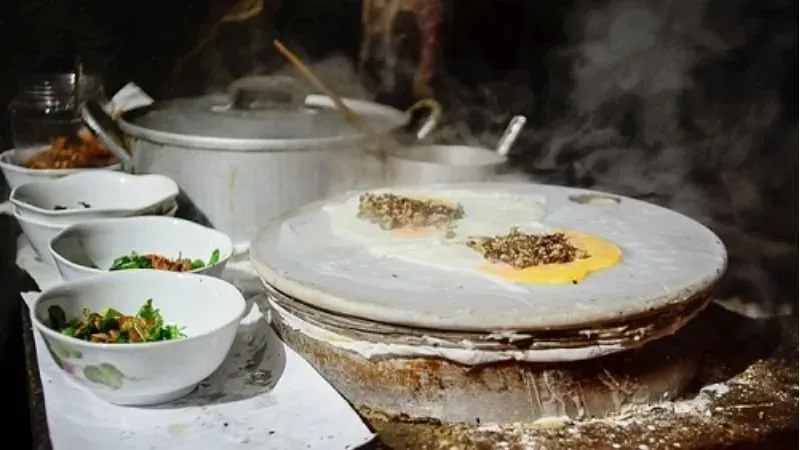
When you sit down, the cook ladles stone-ground rice batter onto a taut fabric steamer suspended over boiling water. As the sheet steams, she cracks a fresh local chicken egg directly onto the centre. She deftly folds the four white corners over the golden yolk, steaming it for just twenty seconds more so the yolk remains soft, warm, and runny.
The proper way to eat it is to pick up the crepe with your chopsticks, slide it into the bowl of hot broth, and let the yolk break into the soup. The broth itself is simmered for ten hours from pork marrow bones, topped with chopped scallions, fragrant coriander, and thick slices of steamed pork sausage (cha lua). Add a squeeze of fresh lime and a teaspoon of roasted chili oil, and you have the single greatest breakfast in northern Vietnam.
- Where to eat: Morning stalls across Ha Giang town, Yen Minh, and along the historic stone alleys of the Dong Van old quarter.
- Best hours: 6:00 AM to 8:30 AM.
- Approximate cost: 35,000 to 45,000 VND (around 1.50 to 1.80 USD) per serving.
3. Chao Au Tau: The Bittersweet Aconite Night Porridge
Chao au tau is undoubtedly Ha Giang’s most fascinating culinary creation, and it requires both culinary curiosity and a dash of nerve. The central ingredient is the tuber of the aconite plant (commonly known as monkshood or wolfsbane), which grows wild on high limestone ridges. In its raw form, aconite contains deadly alkaloids that are intensely poisonous.
Centuries ago, ethnic mountain healers discovered that prolonged, careful cooking neutralizes the poison while preserving the root’s potent medicinal qualities. Cooks soak the dried tubers in concentrated rice-washing water overnight, then boil them in heavy pots over a slow wood fire for eight to ten consecutive hours. Once the starch softens into an edible paste, laboratory testing confirms that the aconitine toxins have broken down completely into harmless compounds.
The softened tuber paste is then simmered with sticky mountain rice, short-grain rice, and rich pork trotters. Chao au tau is sold exclusively after dark. According to traditional medicine, it acts as a powerful restorative that relaxes tired muscles, eases joint aches, and promotes deep, healing sleep after a physically punishing day on mountain switchbacks.
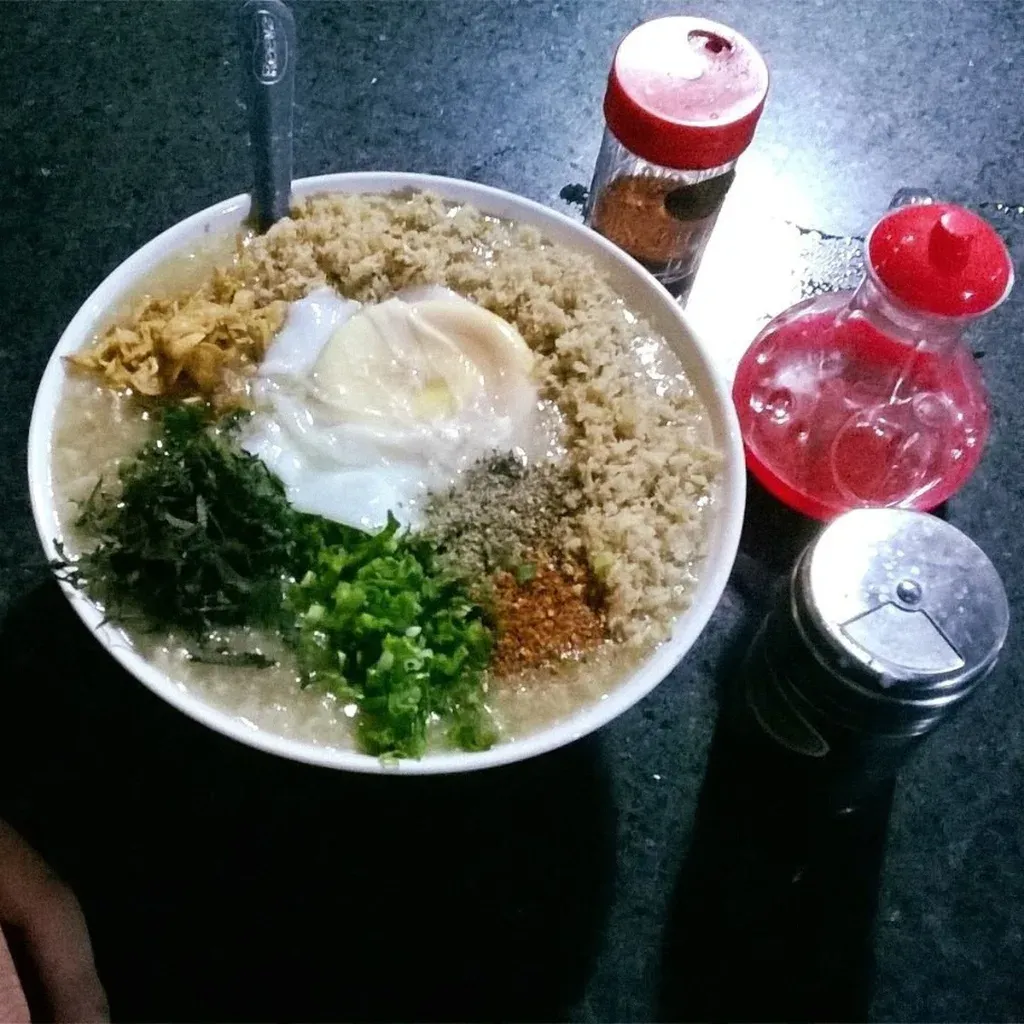
When served, the cook tops the greyish porridge with a raw egg yolk, seasoned minced pork, freshly cracked black pepper, and slivered perilla leaves. Your first spoonful will surprise you with a sharp, medicinal bitterness. But as you swallow, that bitterness dissolves into a rich, nutty sweetness, followed by an unmistakable wave of soothing heat radiating outward from your chest.
- Where to eat: Night street stalls along Tran Phu and Minh Khai streets in Ha Giang City, or near Dong Van old town intersection.
- Best hours: 18:30 PM to 23:30 PM (never sold during daytime).
- Approximate cost: 35,000 to 50,000 VND (about 1.50 to 2.00 USD).
- Field note: Local wisdom advises avoiding raw pears or hard spirits immediately after eating au tau porridge to prevent conflicting hot-cold digestive reactions.
4. Thang Den: Warm Ginger Dumplings for Freezing Highland Nights
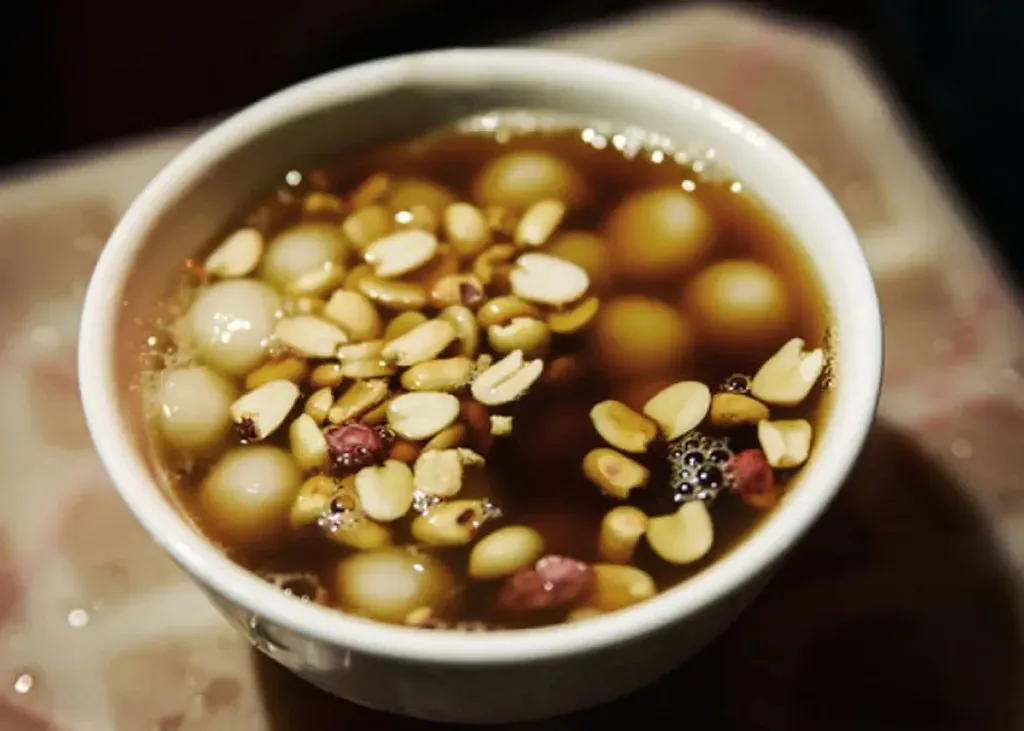
When evening descends over the karst plateau and winter winds whistle through the cracks of rammed-earth walls, nothing comforts a weary traveller like a warm bowl of thang den enjoyed beside a glowing charcoal brazier in Dong Van old town.
Thang den resembles floating rice cakes from the lowlands, but its texture and flavor are distinctly alpine. The dumplings are crafted from prized upland sticky rice grown in Yen Minh valleys. The rice is soaked overnight, ground into a wet slurry on stone mills, and hung in cotton sacks to drain until it forms a smooth, pliable dough. The dough is rolled by hand into bite-sized spheres, either unfilled or stuffed with silky sweet mung bean paste.
Upon ordering, the vendor drops the white spheres into a cauldron of rolling boiling water. Within minutes, the dumplings bob to the surface, signaling they are cooked through. They are scooped into small ceramic bowls and bathed in a ladle of deep amber syrup simmered from unrefined cane sugar and generous handfuls of crushed old mountain ginger. To finish, the bowl is sprinkled with crunchy roasted peanuts, toasted sesame seeds, and a spoonful of creamy coconut milk.
Chewing through the dense, chewy rice dough while the fiery ginger syrup warms your throat makes the biting winter fog outside evaporate from your mind.
- Where to eat: Small open-air carts lining Dong Van old quarter and Meo Vac night market.
- Best hours: 19:00 PM to 22:30 PM, particularly bustling during the chilly months from October through March.
- Approximate cost: 15,000 to 20,000 VND per bowl.
5. Thang Co: The Frontier Horse Meat Stew
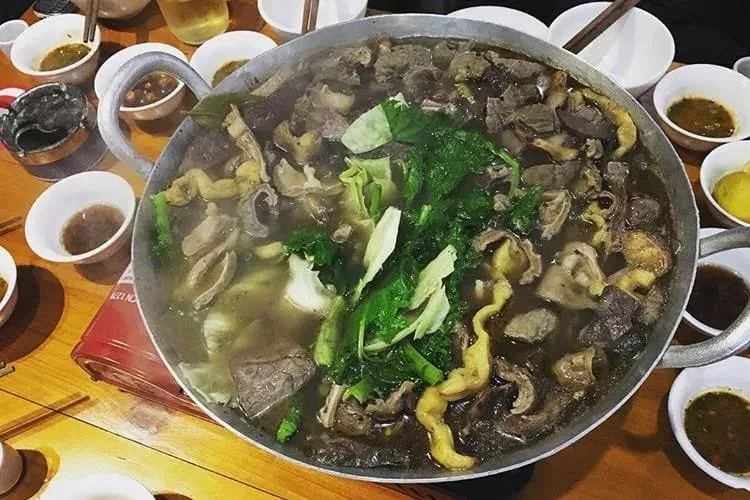
No culinary discussion of Ha Giang is complete without mentioning thang co. Originally created by the Hmong people over two centuries ago, this rustic stew was designed to make use of horses that had grown too old to navigate steep pack trails. Today, it can also be prepared with beef or buffalo, but the cooking technique remains untouched by modern conveniences.
Inside highland markets, thang co is prepared in gargantuan iron woks measuring more than a metre across, perched over open wood fires. Every part of the animal is used: lean meat, cartilage, tendon, marrow bones, and offal. The ingredients are seared in their own animal fat, then submerged in water along with a complex sachet of forest seasonings including roasted cardamom pods, star anise, wild cinnamon bark, grilled ginger, lemongrass, and aromatic mountain seeds (hat doi).
For Western travellers, the appearance of a bubbling cauldron of dark, offal-rich broth can initially feel intimidating. But if you take a seat at a communal wooden bench at the Sunday Meo Vac market or Dong Van market, you will discover a dish with immense depth of flavor. The broth is rich, earthy, and herbal, reminiscent of traditional French or Central European hunting stews. Pair it with crisp mountain mustard greens (cai meo), a bowl of coarse roasted chili salt, and a small cup of warm corn wine, and you will understand why mountain people revere this meal on freezing mornings.
- Where to eat: Ethnic Sunday markets in Meo Vac and Dong Van, or longstanding specialty restaurants in town centers.
- Approximate cost: 100,000 to 150,000 VND for a large sharing bowl, or 300,000 to 400,000 VND for a communal table hotpot.
6. Black Chicken Hotpot with Wormwood: Highland Winter Comfort
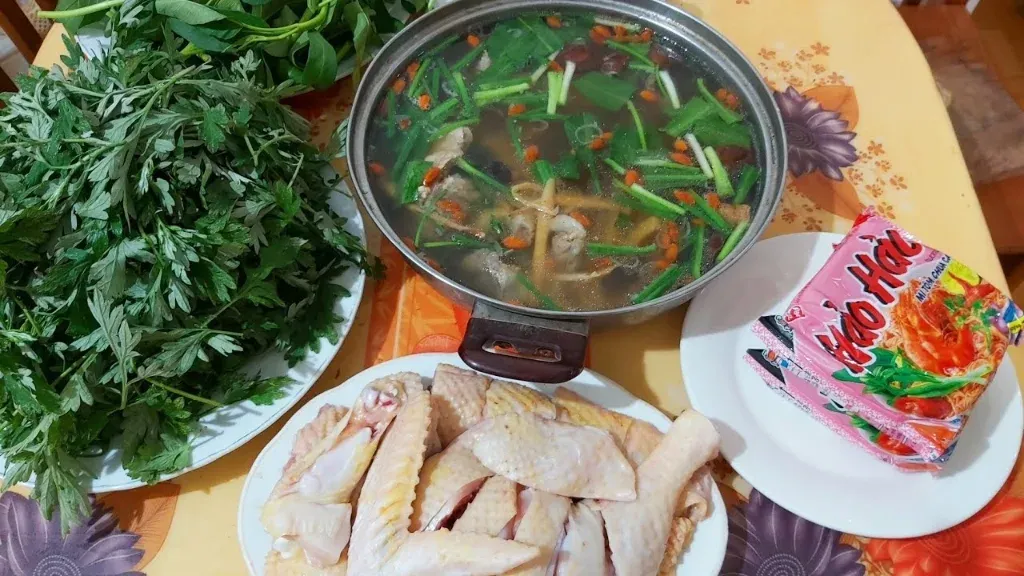
Black-bone chicken (ga den or ga xuong den) is a native breed raised freely by Hmong families across high rocky outcrops. Because these birds forage on steep terrain and eat highland corn, their meat is remarkably lean, firm, and rich in amino acids, while their bones, skin, and meat are dark greyish-black.
On chilly nights in Dong Van, Meo Vac, or Du Gia, gathering around a steaming black chicken hotpot is the ultimate dining experience for groups of friends or families. The chicken is chopped and seared with fresh ginger and mac khen forest peppercorns before simmering in a sweet bone stock. The defining accompaniment is a fresh mountain basket of young wormwood leaves (rau ngai cuu) picked from rock gardens. Dipping the slightly bitter, herbal leaves into the bubbling broth perfectly balances the sweetness of the chicken, warming the body from the very first sip.
- Where to eat: Family eateries in Dong Van, Meo Vac, and homestays in Du Gia, Lo Lo Chai, and Nam Dam.
- Approximate cost: 300,000 to 450,000 VND for a hotpot feeding 3 to 4 people generously.
7. Pho Chua: The Tangy Highland Cold Noodle
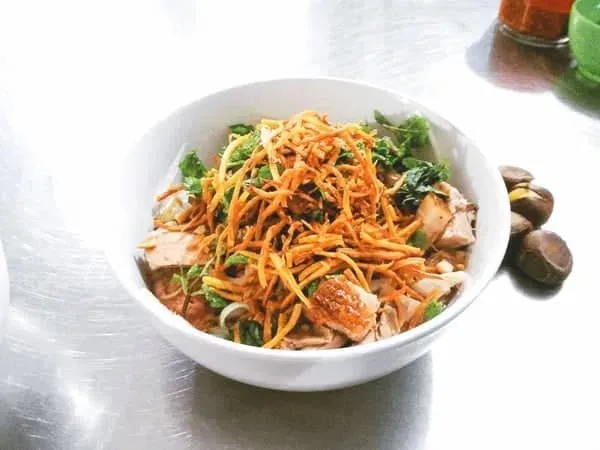
If you travel during the warmer months between May and September, hot soups can sometimes feel overwhelming after hours of riding in the valley sun. Enter pho chua (sour pho), an ingenious cold noodle dish influenced by Chinese border cuisine and refined to local tastes.
Instead of hot broth, pho chua is served at room temperature as a dry mixed noodle dish. Soft, wide rice noodles are laid in a bowl and layered with sliced Chinese char siu pork, crispy roasted mountain duck, thin rings of smoked highland sausage, crunchy pickled green papaya, and crushed roasted peanuts.
The magic lies in the sauce ladled over the top: a glossy reduction of rice vinegar, cane sugar, minced garlic, bird’s eye chilies, and tapioca starch that achieves a perfect sweet-and-sour balance. You toss the noodles with chopsticks to coat every strand. The crunch of the peanuts and papaya against the tender noodles and savory duck creates a refreshing, light, and addictive meal.
- Where to eat: Ha Giang town food stalls and family eateries in Dong Van.
- Approximate cost: 35,000 to 45,000 VND (1.50 to 1.80 USD).
8. Smoked Black Pork and Firewood Sausage
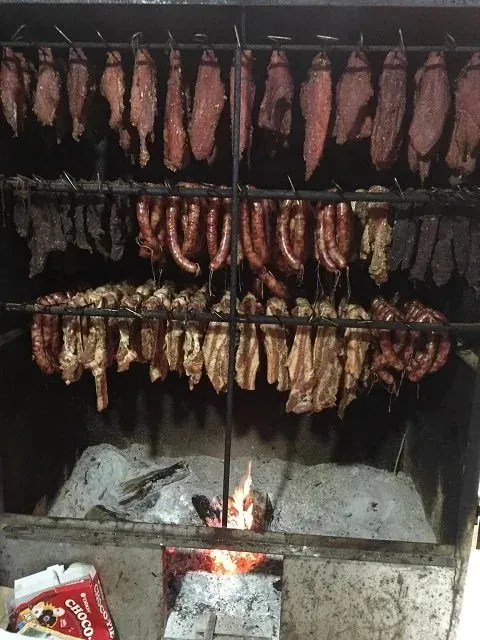
Hanging cured meats over the open kitchen hearth is an essential survival technique of the Tay and Hmong ethnic groups during long mountain winters. Fresh heritage pork from village pigs is sliced into thick ribbons, marinated thoroughly with wild doi seeds, mac khen peppercorns, crushed mountain ginger, and highland corn liquor, then suspended from bamboo ceiling racks above the hearth for weeks.
As firewood smoke from mountain pines slowly cures the meat, the fat turns translucent amber like stained glass, while the lean meat deepens into rich burgundy. When grilled over embers, shredded thin, or pan-fried with wild rock garlic shoots, this smoked pork (thit gac bep) and handmade sausage (lap xuong) deliver an unforgettable woodsmoke aroma best savored beside a crackling homestay fire.
9. Men Men and Wild Mustard Greens: The Ancient Survival Staple
To understand the Hmong soul, you have to understand men men. The rocky peaks of the Dong Van Geopark have almost no flat soil and virtually no standing water, making wet-rice farming impossible. For generations, yellow flint corn grown in limestone crevices has been the staple crop that kept highland communities alive.
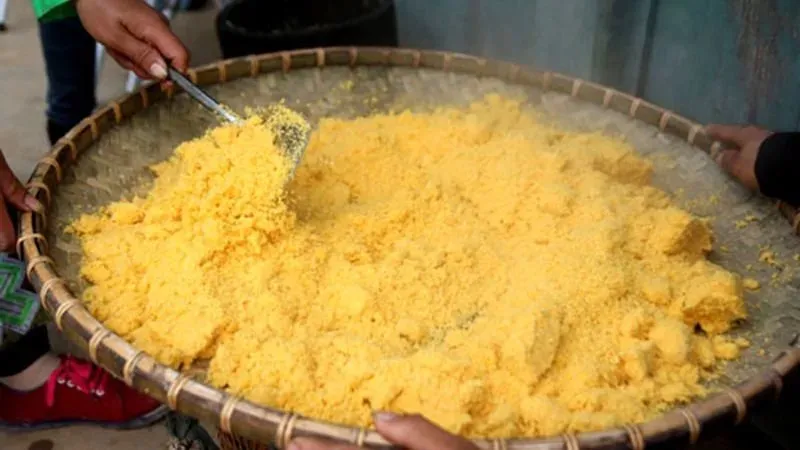
Men men is steamed corn flour. Making it is an exhausting, labor-intensive art: hard corn kernels are dried on rafters, ground by hand using heavy stone millstones, sieved to remove husks, moistened with mountain spring water, and steamed twice in cedarwood steamers over open hearths.
The result is a fluffy, bright yellow couscous-like grain with a sweet, nutty, sun-baked aroma. Because corn flour is inherently dry, it is never eaten alone. Hmong families always pair it with a bowl of soup, most famously canh cai meo, made from bitter mustard greens simmered with crushed ginger. When staying at traditional homestays in valleys like Du Gia village or Lung Cam, ask your host if you may try a small bowl of men men. Eating it is a direct connection to centuries of mountain heritage.
10. Ruou Ngo: The Warmth of Wild Herbal Corn Wine
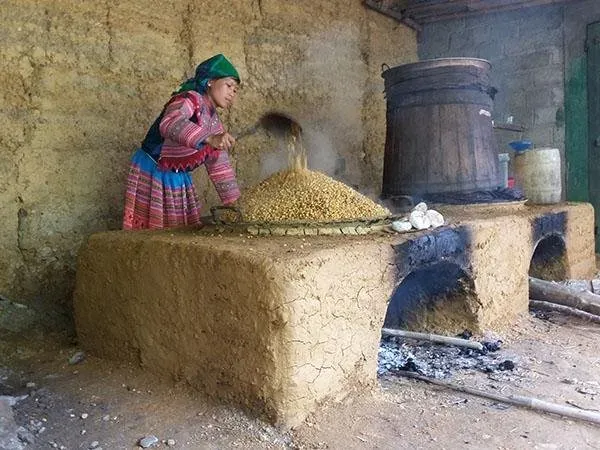
Every evening meal in a Ha Giang homestay culminates in the pouring of ruou ngo (corn wine). This is not harsh industrial ethanol. Authentic mountain corn wine is double-distilled from local corn fermented with natural yeast cakes pressed from more than thirty wild herbs gathered in high jungle valleys.
Good corn wine pours crystal-clear and carries an aroma reminiscent of roasted sweetcorn, wildflowers, and forest moss. It slips down the throat remarkably smooth, warming your belly without the harsh chemical burn of commercial vodka.
That said, we always offer our guests one crucial warning: corn wine is deceptively smooth, but its alcohol content typically sits between 25% and 35%. While participating in a polite toast with your host family is wonderful manners, never drink heavily if you are riding a motorcycle the next day. The steep passes of northern Vietnam demand 100% of your reflexes, and Vietnam enforces a strict zero-tolerance legal limit for blood alcohol while driving. Read more in our guide on road safety.
Read our in-depth essay: Corn Wine vs Happy Water: What Travellers Get Wrong About Ha Giang Mountain Spirit to discover the 30-herb yeast tradition, how to spot authentic brews, and highland toasting etiquette.
Route Dining Directory Along the 350 km Loop
To help you structure meal times during your journey without getting caught hungry between remote passes, here is our field-tested dining schedule:
| Route Stop | Recommended Time | Authentic Local Specialty | Field Practical Notes |
|---|---|---|---|
| Ha Giang City | 06:00 to 07:30 | Banh cuon trung with hot bone broth | Fuel up early along Minh Khai or Tran Phu street before morning climbs |
| Trang Kim Hamlet (Quan Ba) | 08:30 to 09:30 | Wood-fired pho ga doi | Fresh handmade noodles beside Mien River; arrive before 10:00 AM before noodles sell out |
| Yen Minh Town | 11:30 to 13:00 | Family-style com binh dan with stir-fried cai meo | Perfect halfway lunch stop; reliable family diners around the town market square |
| Hmong King Palace / Sa Phin | 11:30 to 13:00 | Bamboo tube rice (com lam) and grilled chicken skewers | Quick, authentic snack stalls outside the palace gate before riding to Dong Van |
| Dong Van Old Town | 18:30 to 21:00 | Black chicken hotpot and hot ginger thang den | Enjoy thang den under old market eaves; reserve hotpot 1 hour ahead during peak weekends |
| Meo Vac Sunday Market | 07:00 to 09:00 (Sundays) | Steaming horse thang co, sticky rice, buckwheat cakes | Communal wooden benches in market food sheds; ensure broth is actively boiling |
| Du Gia Village | 18:00 to 20:30 | Charcoal-grilled stream fish, smoked pork, bamboo rice | Communal family dinner cooked fresh by your homestay hosts on stilt-house hearths |
| Ha Giang City (Night) | 19:00 to 22:30 | Chao au tau herbal night porridge | Ideal restorative post-ride meal along Tran Phu street before boarding the night bus |
Four Golden Rules for Highland Food Safety and Gut Health
- Be cautious with block ice: In remote mountain valleys, block ice is often produced with unfiltered local water and transported on open motorbikes. If you have a sensitive stomach, stick to hot tea boiled fresh on woodstoves or sealed bottled mineral water.
- Always insist on piping-hot, thoroughly cooked food: The high plateau is hours away from specialized medical hospitals. Avoid raw dishes such as blood soup (tiet canh) or raw stream fish salads. Ensure meat in hotpots or broths is brought to a vigorous rolling boil before eating.
- Vegetarian and vegan dining advice: Most highland cuisine traditionally uses rendered pork lard (mo lon) for stir-frying wild greens. If you follow a vegetarian or vegan diet, inform your host or eatery clearly: request dishes cooked purely with vegetable oil and seasoned with salt rather than fish sauce. Mountain hosts are warm and accommodating, and will happily boil tender mustard greens fresh for you.
- Respectful highland toasting etiquette: When staying with an ethnic family, being offered a cup of herbal corn wine is a sign of hospitality. You can politely accept with both hands and take a small sip. If you are operating a motorbike the next morning, explain that you must keep a sharp mind for the passes; your hosts understand mountain danger and will respect your decision.


