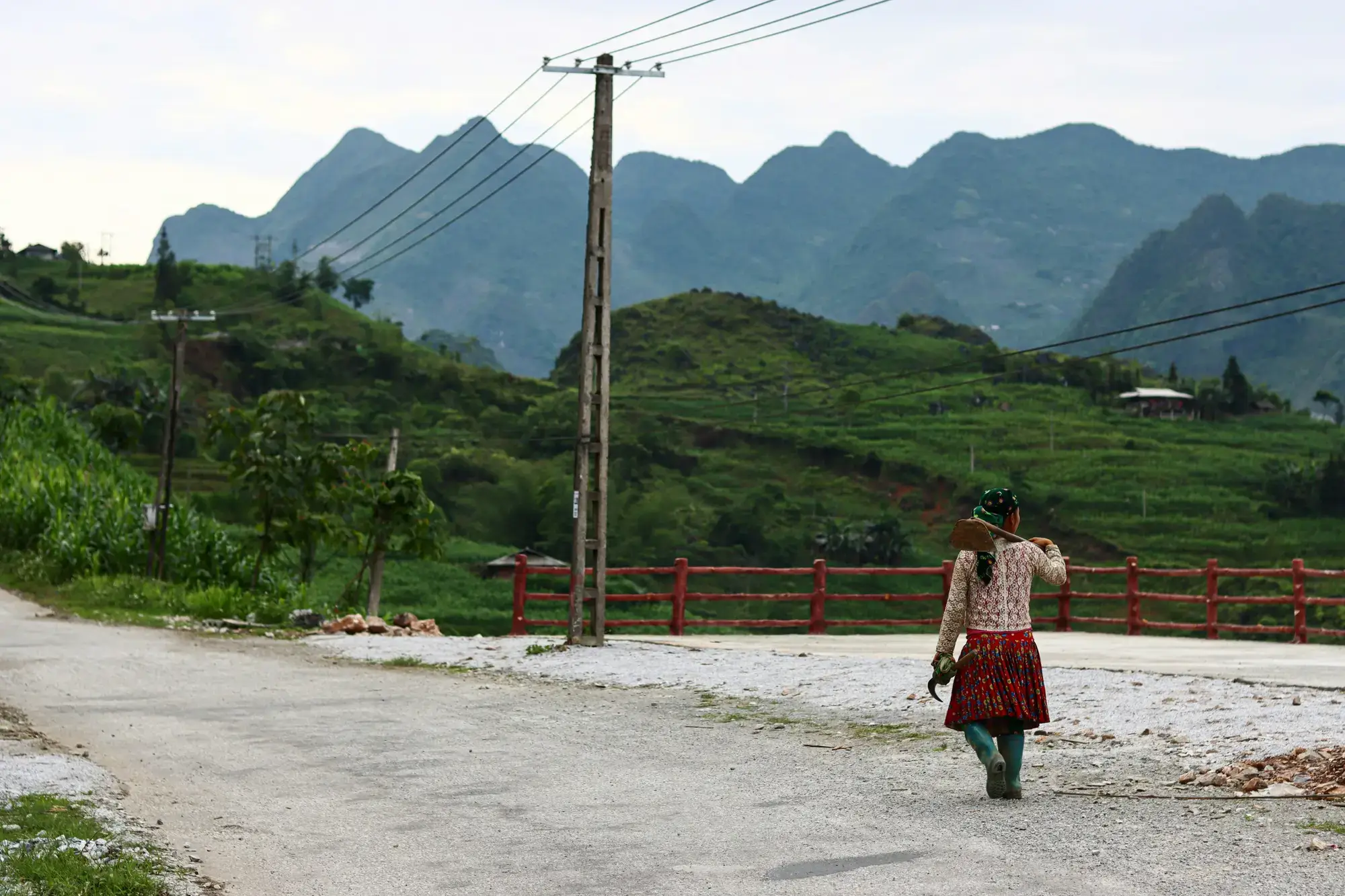
If you ask those of us who grew up in the mountains of Ha Giang where to find the true, beating heart of our province, we will never point you to a polished scenic viewpoint or a tourist cafe. We will tell you to set your alarm for 4:30 AM on a Sunday morning and head down to the nearest village market.
In the West or in big cities like Hanoi, a market is primarily a commercial errand, a place where people hurry in with grocery bags, pay their bills, and leave. Up here on the limestone frontier, an ethnic highland market (cho phien) is a community festival, a social reunion, and a cultural institution rolled into one. For Hmong, Tay, Dao, and Giay families living in remote hamlets clinging to vertical cliffs, market day is the singular event that punctuates their weekly calendar. It is where distant relatives catch up on family news, where young people court across market stalls, where elders sit side by side sipping corn wine, and where children receive their sole treat of the week.
To experience a northern market properly, you cannot arrive at 9:30 AM after a leisurely western breakfast. By then, the livestock has been traded, the best produce is gone, and the mountain families are already packing their bamboo baskets for the long hike home. You must rise while the stars are still out, step into the biting mountain air, and watch the stone world wake up.
The Dawn Migration Across the Passes
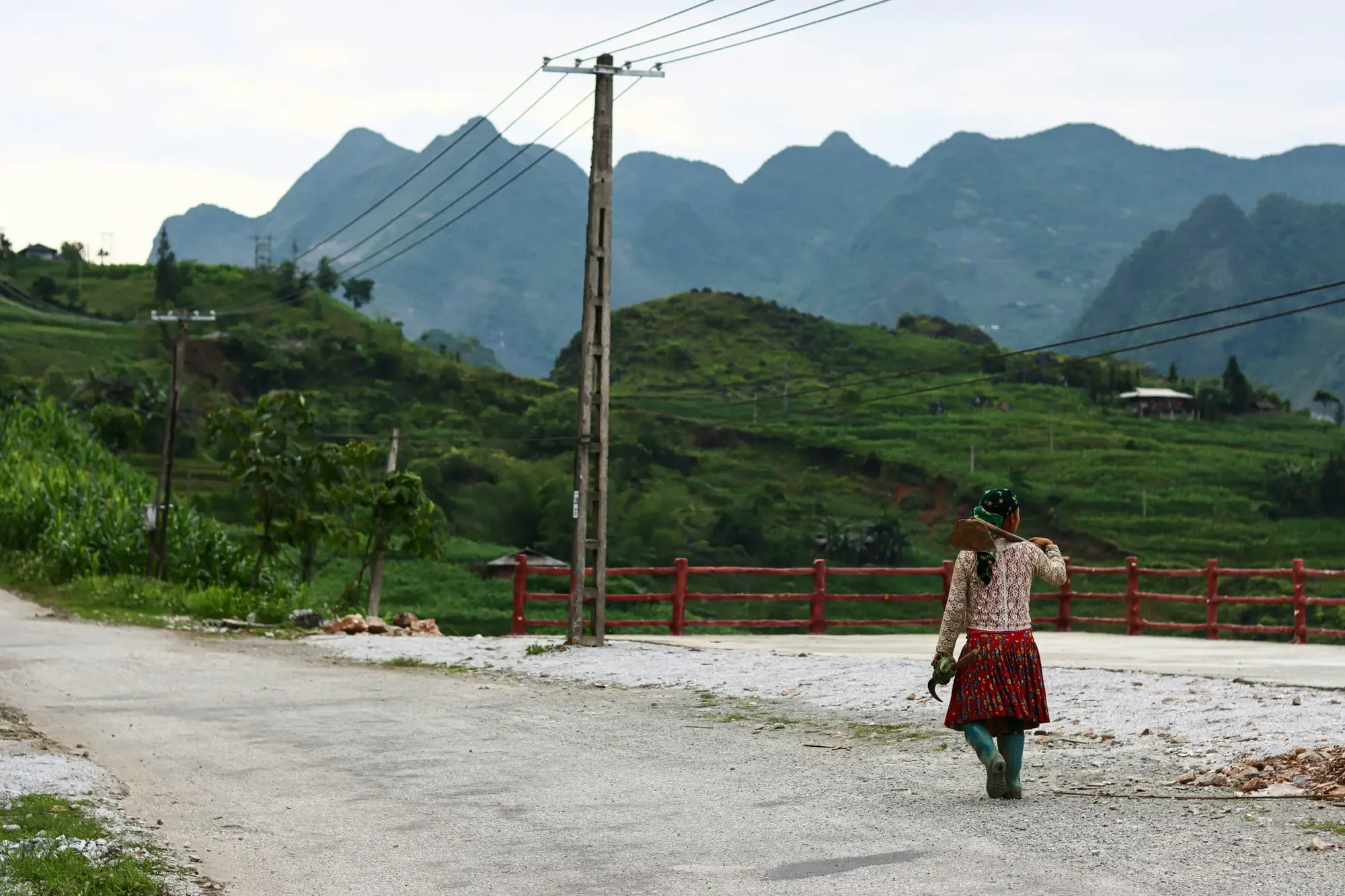
At five o’clock in the morning, darkness still blankets the limestone canyons. If you stand on the veranda of a homestay in Dong Van or Meo Vac, the valley feels completely asleep. Look up toward the high mountain ridges, however, and you will begin to notice tiny pinpricks of light bobbing slowly down steep dirt trails. These are headlamps worn by local farmers who began walking at three in the morning to reach town by first light.
On the mountain roads, the silence breaks gradually. First comes the soft crunch of handmade hemp shoes on gravel, followed by the metallic click of horse hooves against the asphalt. Then, the sputtering engines of old semi-automatic motorbikes echo through the ravines, each carrying an entire family alongside crates of squawking chickens or a squealing black pig strapped securely over the rear fender.
Riding across the Ma Pi Leng pass at first light to attend the Sunday market is an unforgettable journey. Dense layers of autumn and winter mist billow out of the Tu San gorge, swirling across the road like white cotton. The air is bitterly cold against your chest, but as you approach the outskirts of town, the smell of woodsmoke and roasting spices tells you that something extraordinary is coming to life.
The Most Iconic Markets on the Loop
Every district and valley across Ha Giang operates on its own market schedule. Knowing where and when to be is the secret to experiencing the real thing.
1. Meo Vac Sunday Market: The Livestock Capital
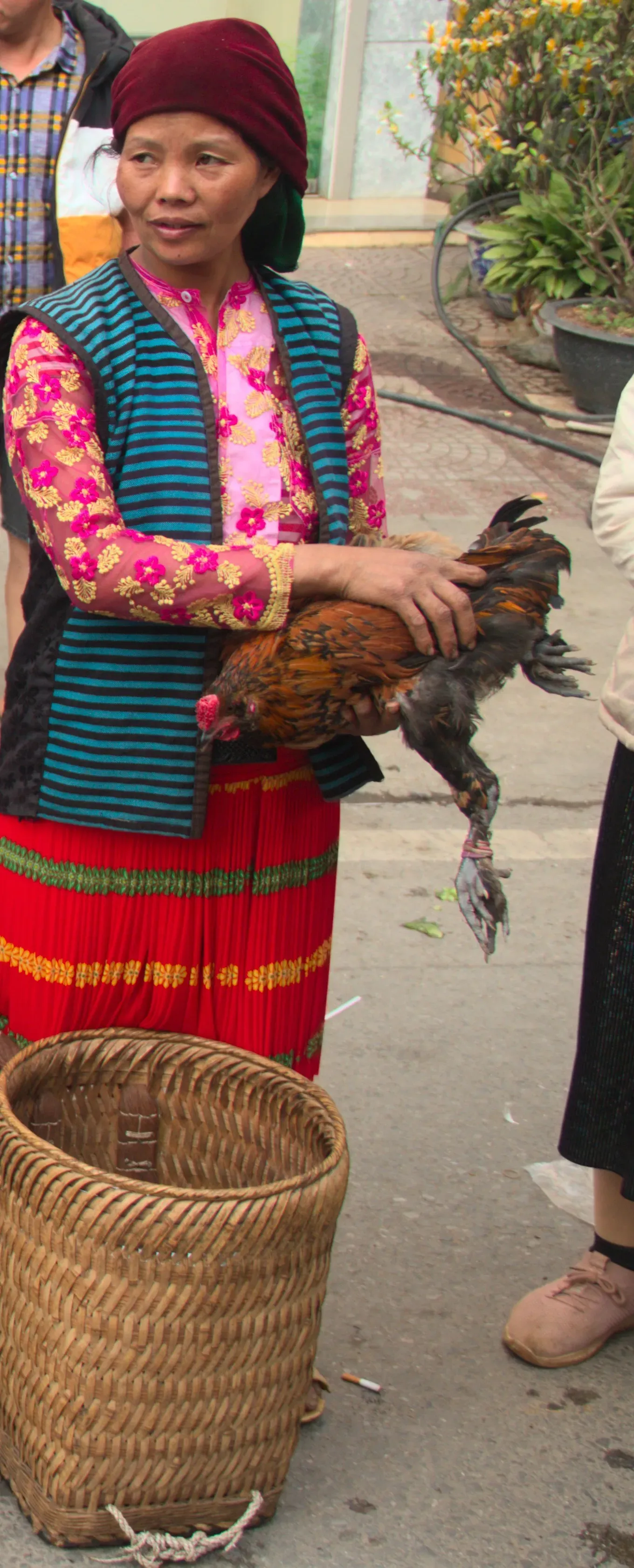
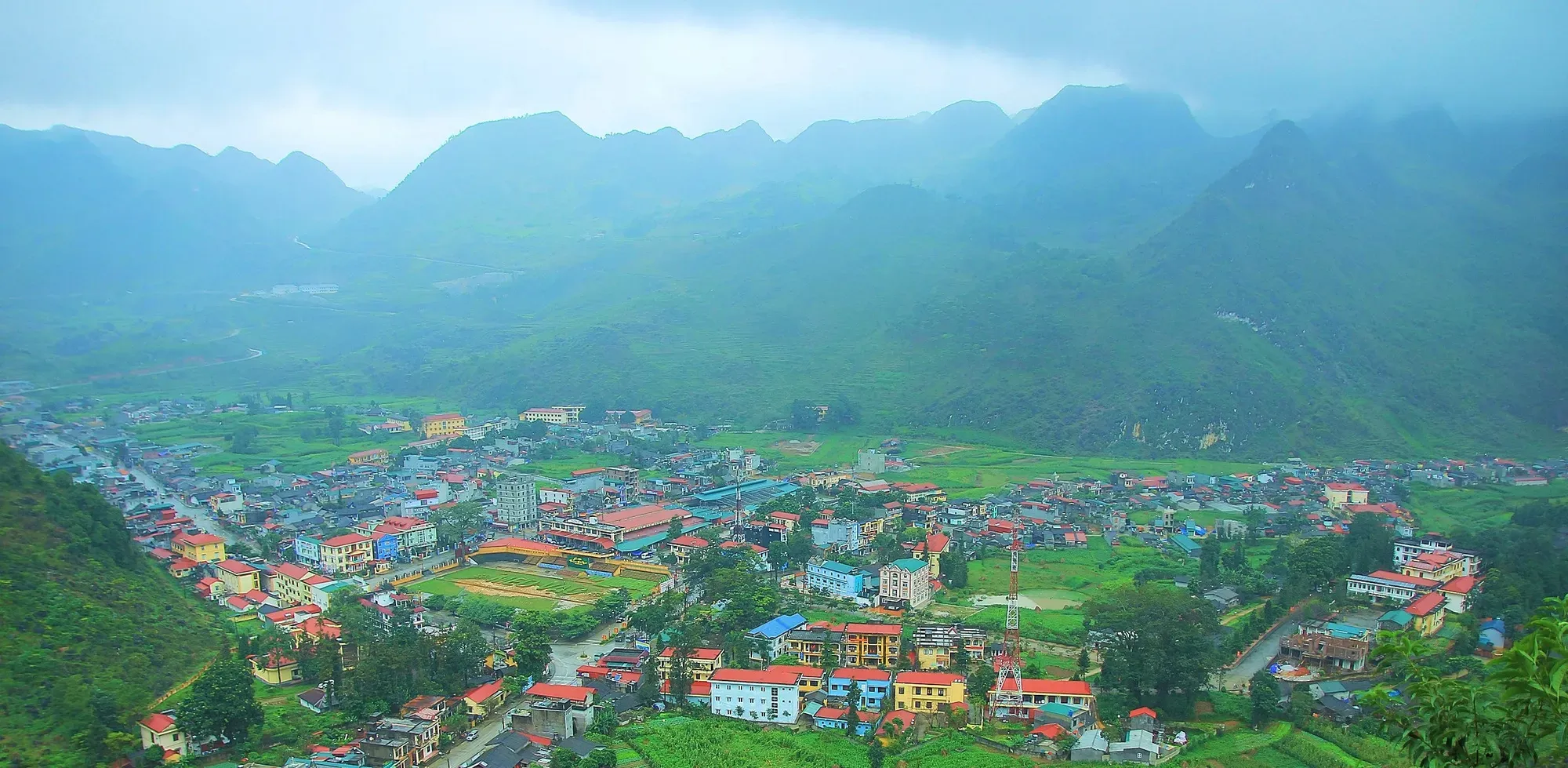
Held every Sunday morning in the centre of Meo Vac town, this is the largest and most exhilarating market in the entire northern border region. While the central covered halls house clothing and household goods, the real spectacle takes place in the open outdoor arena behind the complex: the cattle market (cho bo).
Here, hundreds of sturdy highland yellow bulls and water buffalo are lined up alongside steep dirt banks. Hmong and Bo Y men in heavy woollen jackets inspect the animals with expert eyes, testing shoulder muscle density, examining teeth, and rubbing flanks. There is zero shouting or aggressive haggling. Negotiations happen through measured head nods, quiet murmured estimates, and respectful handshakes. Once a deal is struck, large wads of Vietnamese Dong change hands, and buyer and seller immediately head over to the food pavilion to celebrate over a hot bowl of soup. Discover more logistics in our dedicated guide to Meo Vac market.
2. Dong Van Sunday Market: Color Amidst Antique Stone
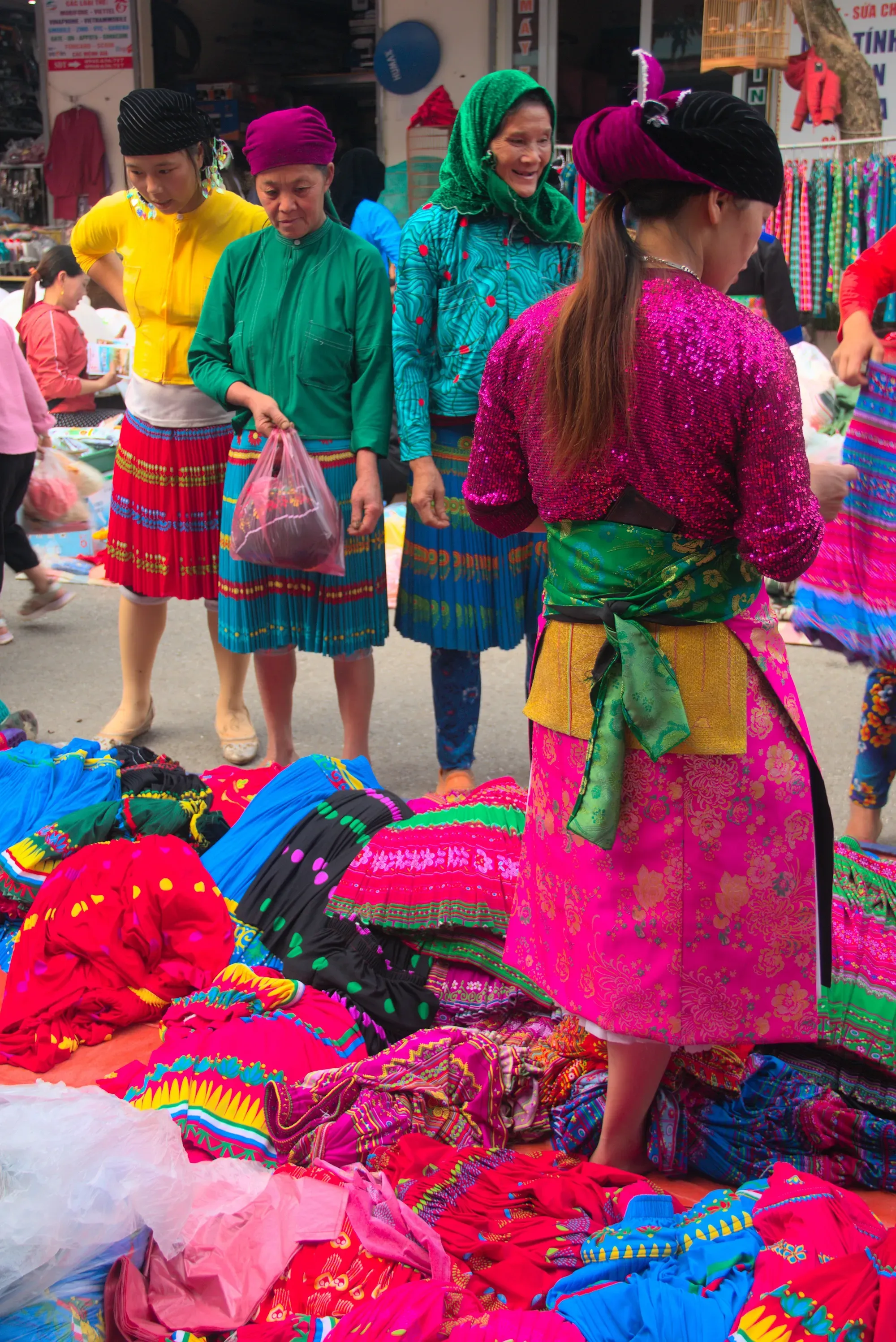
Also taking place every Sunday, the Dong Van market is set against the stone-and-tile backdrop of the historic Dong Van old quarter. Built during the French colonial era using local limestone blocks and Chinese-style yin-yang clay roof tiles, the market square becomes an explosion of vibrant color at dawn.
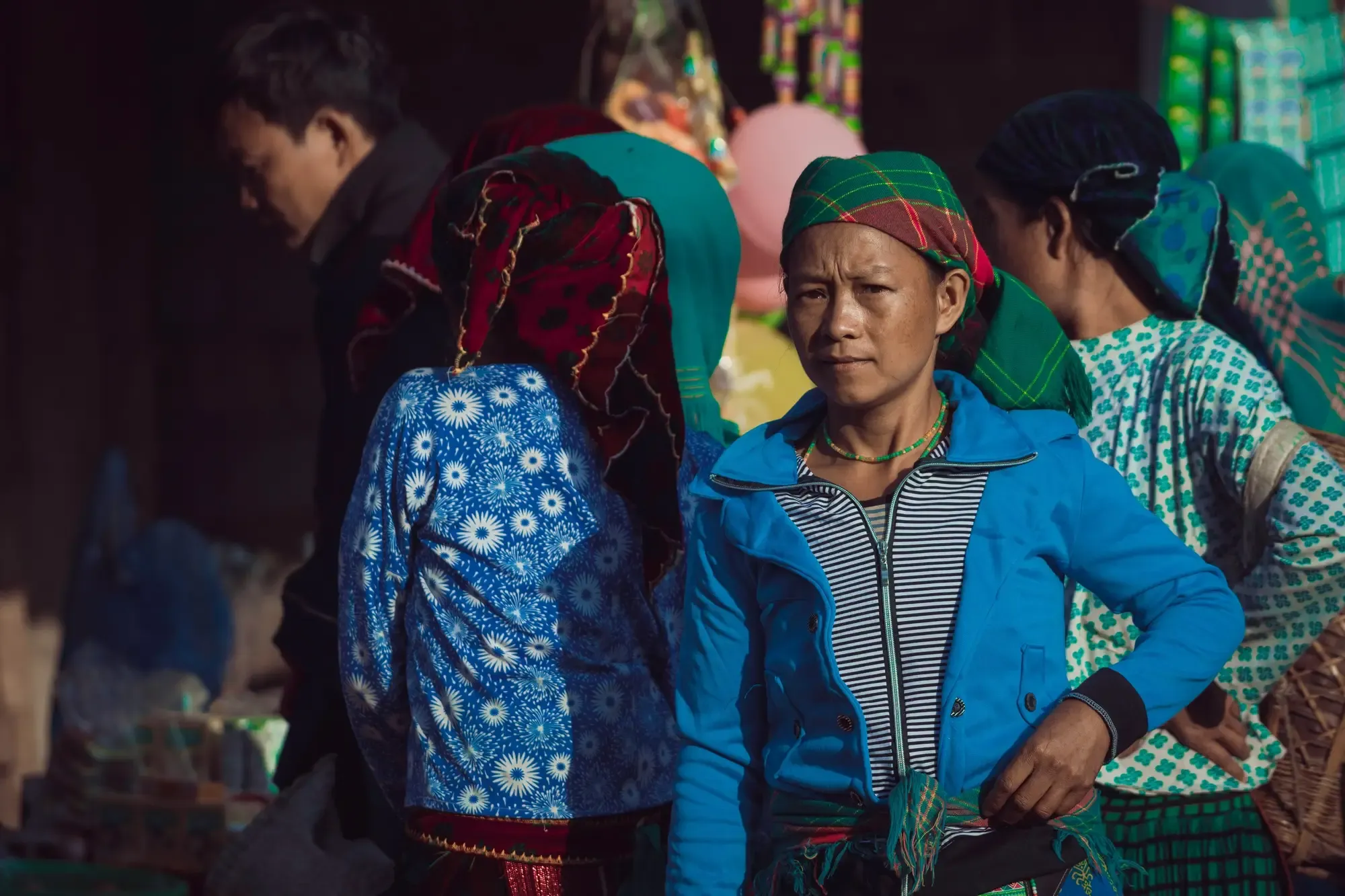
Women from Hmong Hoa (Flower Hmong) and Giay communities arrive wearing pleated, hand-embroidered hemp skirts adorned with intricate geometric patterns, neon sashes, and jangling silver jewelry. Stalls overflow with fragrant local produce: fiery bird’s eye chilies grown in karst soil, wild cardamom pods harvested from high jungle canopies, raw buckwheat honey, and bundles of indigo-dyed linen cloth.
3. The Backward Markets and the Khau Vai Love Market
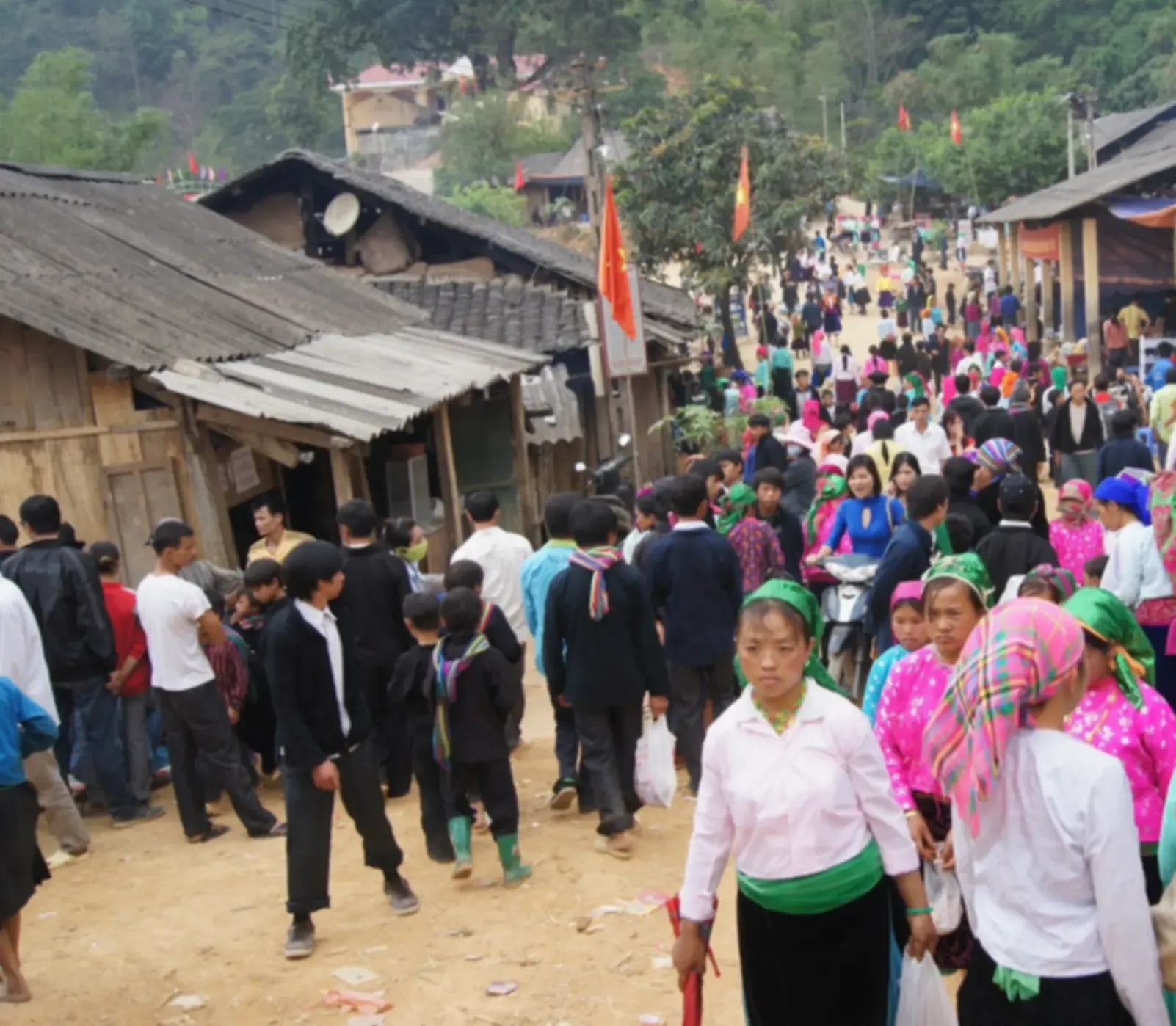
If your travel dates do not align with a weekend, you can still experience traditional market culture by timing your trip to a “backward market” (cho lui). These markets do not follow the modern Gregorian seven-day week. Instead, they operate on a rotating six-day cycle based on the twelve signs of the Chinese zodiac. Each week, the market day moves one day backward. For example, if a market takes place on the day of the Tiger this week, it will meet on the day of the Ox next week.
- Sa Phin Market: Located directly across the road from the historic Vuong family mansion, this market gathers in a sheltered bowl beneath towering karst pinnacles. It is wonderfully rustic, uncommercialized, and retains an authentic nineteenth-century mountain atmosphere.
- Pho Bang Market: Nestled inside the peaceful border valley of Pho Bang town, this quiet gathering serves local Han, Hmong, and Pu Peo families. It moves at a gentle, unhurried pace, with local blacksmiths hammering sickles and knives right on the stone pavement.
- Lung Phin Market: Situated between Yen Minh and Meo Vac, Lung Phin is famous across the province for high-grade mountain dried beef, wild medicinal herbs, and ancient Shan Tuyet tea cakes.
- Khau Vai Love Market: Held just once a year on the 27th day of the third lunar month in Meo Vac, this legendary gathering allows ex-lovers whose circumstances prevented marriage to reunite freely with complete cultural blessing.
The Aromas and Flavors of the Market Floor
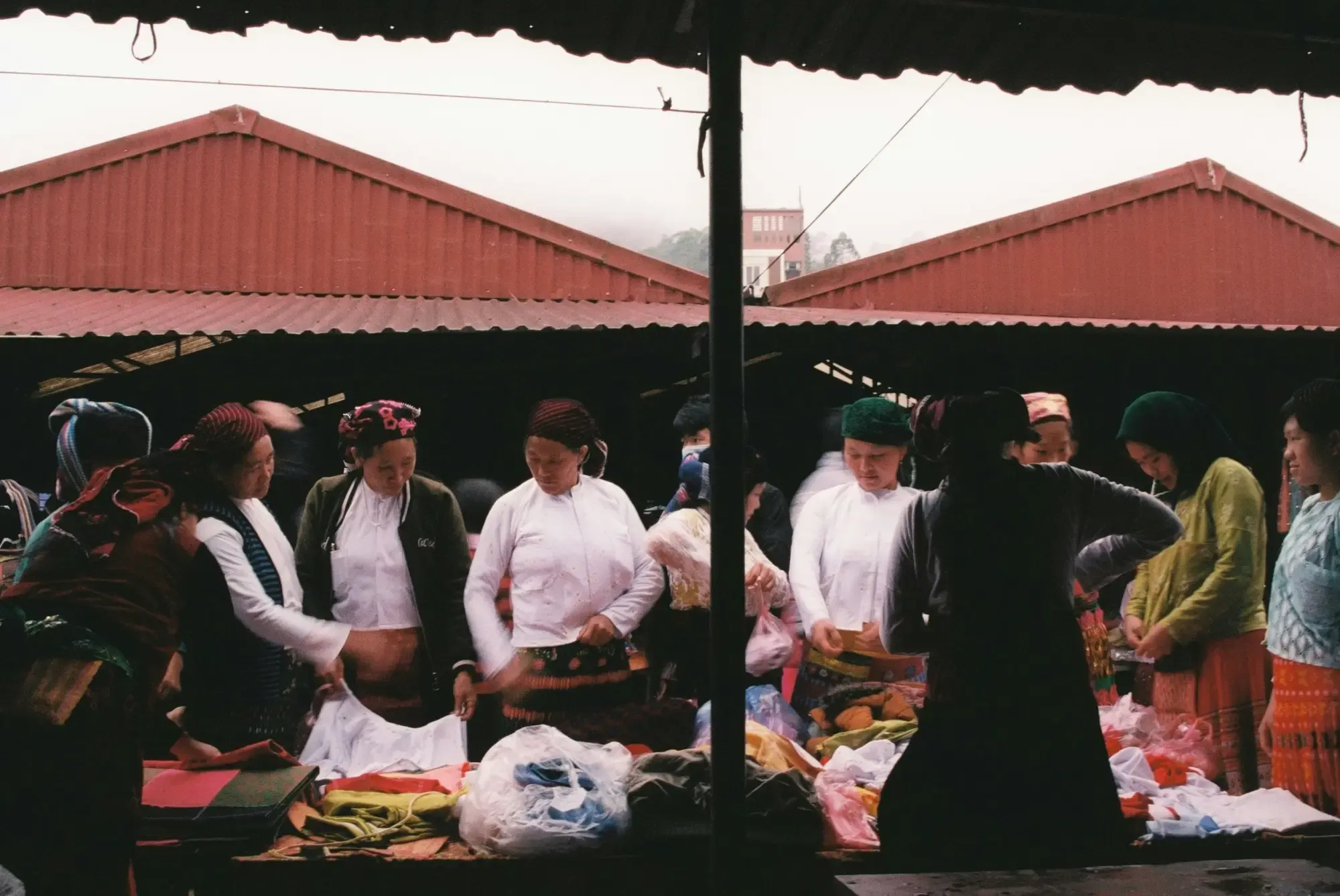
You cannot understand a highland market by observing it from a distance; you have to sit down on a low wooden bench and breathe it in. The culinary quarter is the warmest, loudest, and most intoxicating corner of any market.
By 6:30 AM, giant iron cauldrons exceeding one metre in diameter are boiling furiously over roaring wood fires. This is where thang co, the legendary traditional stew of northern ethnic groups, is prepared. Made from horse or beef meat, marrow bones, and offal simmered for hours with lemongrass, ginger, star anise, and roasted cardamom, it fills the chilly air with a rich, earthy aroma. Next to the cauldrons, vendors serve bowls of steaming pho, freshly rolled egg crepes (banh cuon trung), and golden rounds of steamed buckwheat flour cakes (banh tam giac mach).
A few steps away sits the corn wine section (cho ruou). Here, dozens of white plastic jerrycans line the walkway, each filled with clear liquor distilled from highland flint corn fermented with wild herbal yeast. Buyers do not rush. A customer dips a small plastic spoon into the container, pours a few drops into the palm of his hand, rubs his hands together, and inhales the fragrance to assess the yeast quality before taking a tiny sip. If the wine is mellow, fragrant, and warm without burning the throat, a deal is made.
Practical Host Advice for Visiting Highland Markets
To make the most of your market morning while treating local communities with courtesy, here is what we recommend to our guests:
1. Arrive Before 7:30 AM
Highland life starts early and ends early. Between 6:00 AM and 7:30 AM, market energy is at its absolute peak. By 9:30 AM, the majority of business is concluded, and by 10:30 AM, the stalls are largely empty as families begin their arduous journeys back up into the mountains. If you show up at mid-morning, you will miss the entire spectacle.
2. Carry Small Paper Cash
There are no card terminals, Apple Pay, or QR code payment apps in village livestock rings or roadside vegetable stalls. Furthermore, cellular internet service inside high valleys can be patchy. Carry plenty of small Vietnamese Dong banknotes (10,000, 20,000, and 50,000 VND denominations) so you can pay vendors with exact change.
3. Do Not Haggle Aggressively
Mountain families do not travel down to market to turn a corporate profit. They sell a dozen eggs or two bundles of wild greens to buy basic necessities like cooking oil, iodized salt, or medicine. Prices are already remarkably modest. While polite, good-natured bargaining is acceptable in souvenir areas, never grind local vendors over pocket change.
4. Photography Etiquette and Respect
When you see village elders in traditional indigo attire or mothers carrying babies in ornate back-slings, wanting to take a photo is natural. However, please remember that this is their everyday life, not a human zoo.
Always catch the person’s eye, smile, and make a polite gesture with your camera to ask permission before shooting. If they turn away or wave their hand, respect their wishes immediately without hesitation. Never thrust large zoom lenses into people’s faces, and never pay children money or hand out candy for photos, as this encourages harmful street begging. Please review our community Visitor Pledge to understand how thoughtful travel protects local culture.
5. Planning Your Route and Driving Safely
To explore the Sunday markets in Dong Van or Meo Vac comfortably, arrange your travel itinerary so you sleep in that respective town on Saturday night. Our classic 4-day loop provides the ideal pacing to coordinate weekend market stops.
Because market mornings feature dense pedestrian traffic, wandering cows, and heavy fog on the passes, please ride with heightened care. Keep your headlight on low beam, maintain low speeds through village approaches, and watch for pedestrians walking along narrow asphalt edges. Review our essential guidance on road safety before setting out.
A morning spent at a Ha Giang highland market is an encounter with a way of human life that has resisted the rush of modern commercialism. Walk in with humility, share a hot cup of tea on a wooden bench, and let the authentic spirit of the northern mountains stay with you long after you leave.


