
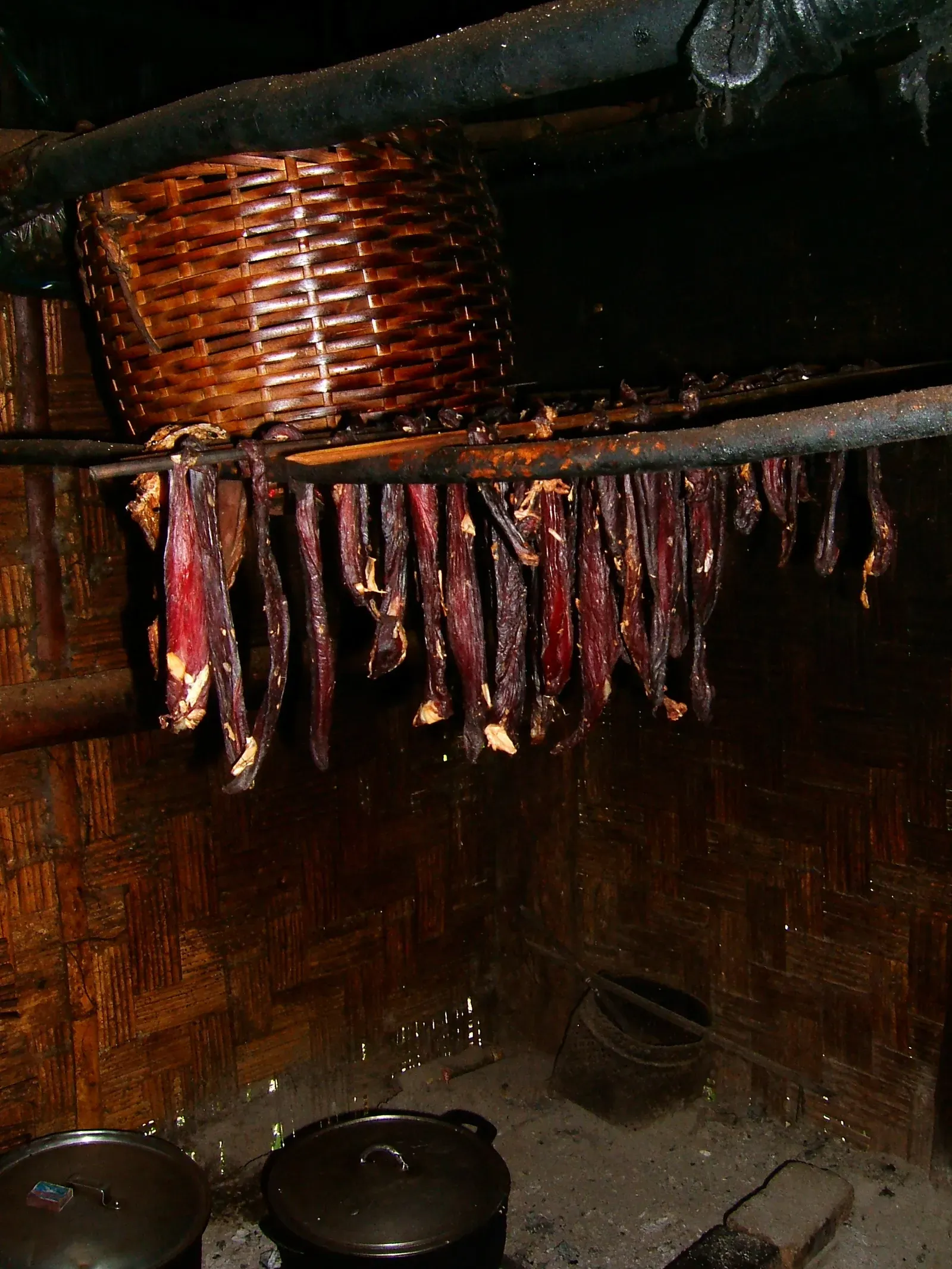
Walk into any traditional Tay homestead in Thon Tha, a Dao home in Hoang Su Phi, or a Hmong household in Meo Vac, and when you glance up at the bamboo drying racks suspended above the open hearth, you will spot dark, elongated strips hanging in quiet suspension.
Coated in wood soot and chimney ash, they look like weathered pieces of firewood at first glance. Yet watch as the host shaves away the blackened crust with a small knife: a radiant, ruby-red core appears, releasing a fragrant, resinous aroma of wild spices and dried pine smoke.
This is smoked black pork (thit lon gac bep) — a quintessential culinary symbol of mountain thrift, patience, and highland hospitality.
Born from free-roaming black pigs on limestone cliffs
You cannot produce authentic smoked pork using ordinary commercial supermarket cuts. The genuine product requires native highland black pigs (often referred to affectionately as “armpit pigs” because of their compact size).
Sporting jet-black bristles, elongated snouts, and lean muscular legs, these animals roam freely through bamboo forests and karst outcrops. They forage for wild roots, forest worms, and drink from mountain springs, supplemented only by occasional handfuls of field corn and chopped wild banana stalks.
Because they hike steep cliffs daily, they grow slowly (taking an entire year to reach just 20 to 30 kg). But in return, their meat is remarkably lean and dense like game, with a firm, gelatinous rind that crisps instead of turning greasy.
Cured with wild forest botanicals and bathed in winter smoke

Ahead of the Lunar New Year or during major village gatherings when a pig is butchered, the finest shoulder, loin, and pork belly cuts are sliced into strips roughly two hand-spans in length.
The secret to Ha Giang’s smoked pork lies in its wild forest marinade:
- Toasted coarse salt: Rubbed deeply into every muscle fibre to draw out surface water and start natural curing.
- Charred black cardamom and wild doi seeds: Wild black cardamom gathered from ancient forests in Quan Ba and Yen Minh is charred over embers to pop the shell, then crushed fine. Mountain doi seeds add a peppery, citrusy perfume alongside crushed mountain ginger and dried chili flakes.
- Highland corn liquor: A splash of herbal corn wine sanitises the meat while imparting a rich crimson hue.
After resting in clay jars for several days, the strips are tied with split bamboo twine and hung directly from ceiling racks roughly two metres above the hearth.
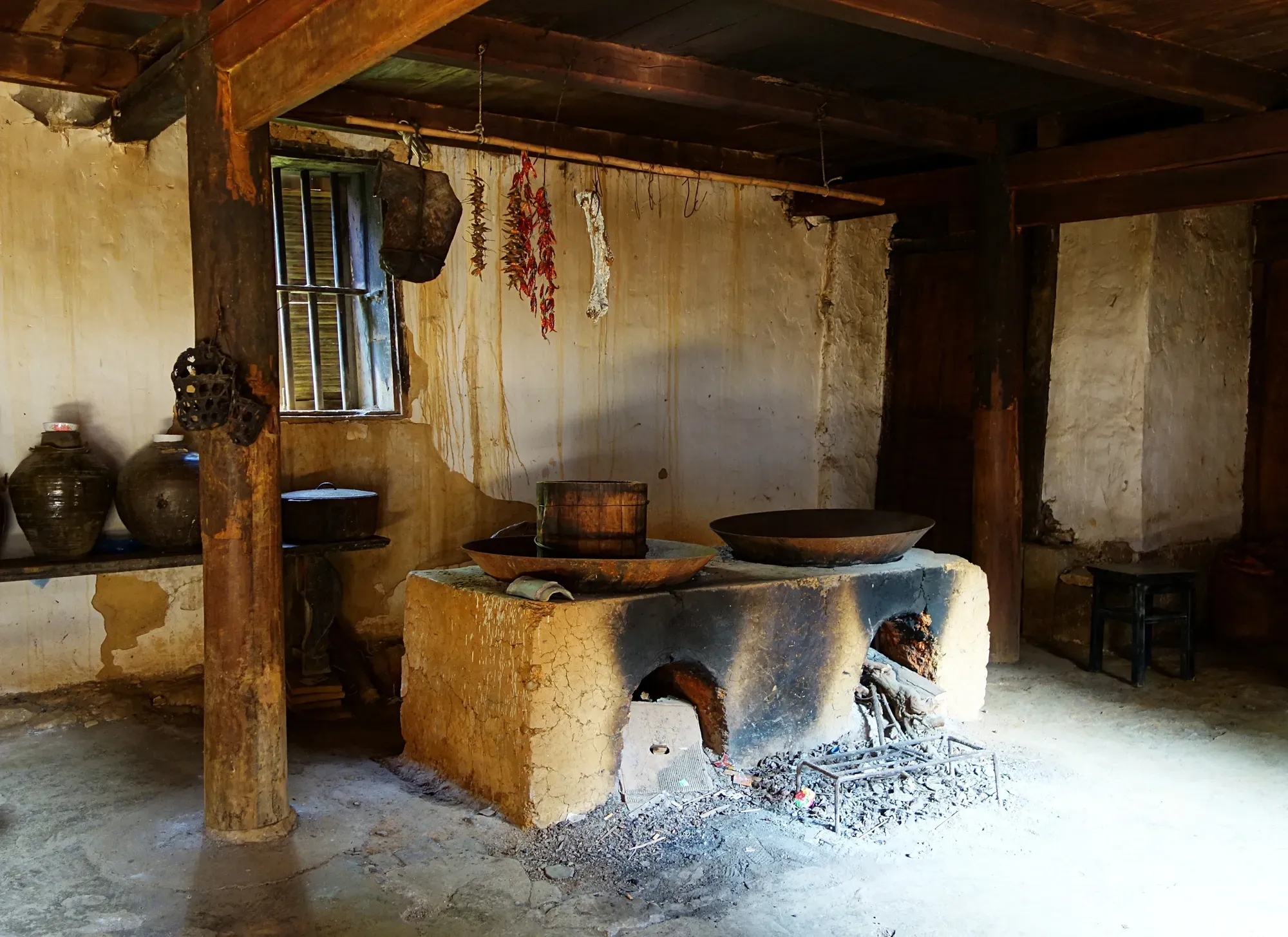
Highland hearths burn day and night throughout winter. Gentle smoke from pine, cypress, and fir wood drifts upward, enveloping the meat. The natural compounds in wood smoke act as a natural preservative, dehydrating the strips gently without desiccating the interior. Over weeks and months, the meat shrinks slightly, dripping fragrant rendered fat into the embers below. Prepared this way, the pork keeps in pristine condition for an entire year without refrigeration.
How to eat it properly: unlocking the depth of time
Smoked pork cannot be rushed. A local host will take down a strip, soak it briefly in warm mountain water to loosen the exterior soot, and scrub it clean with a stiff bamboo brush before simmering or charring it in hearth ashes.
Classic ways to prepare it:
- Flash-fried with mustard greens: Sliced paper-thin like translucent petals, then tossed into a sizzling cast-iron wok with fresh bitter mustard greens (cai meo) and crushed garlic cloves. The rendered savory fat coats the bitter greens, creating a sublime balance.
- Stir-fried with sour bamboo shoots: Tart fermented wild bamboo with chili pairs effortlessly with the heavy, cardamom-scented smokiness of the pork.
- Charcoal-grilled and hand-shredded: Tender lean cuts are buried in hot embers until the edges caramelise, lightly beaten with a wooden mallet, and shredded by hand. Dipped into salt mixed with crushed wild forest pepper, it makes an unforgettable companion to warm corn wine on a foggy winter night.
When staying at a homestay in Du Gia or Lo Lo Chai, ask your host if they have authentic kitchen-smoked pork available. You will quickly discover why this smoke-cured specialty is considered the finest gift a highland family can share with traveling guests.


