
Visit a mountain market like Dong Van Market or Meo Vac Market on a crisp Sunday morning, and you will see tall wooden steamer pots billowing fragrant vapour into the mountain air. Inside sits a mound of golden, crumbly flour smelling faintly of roasted kernels and sweet field corn.
This is men men — the staple corn dish that has sustained the Hmong ever since they first cleared patches of jagged rock in the extreme north.
Yet many travelers eager to try local specialties scoop up a spoonful, swallow, and immediately reach for water in distress. Without understanding the craft and traditions behind it, the flour feels coarse, dry, and almost impossible to swallow. To appreciate men men, you must understand how it came to exist and how locals actually eat it.
Born from soil pockets where rice cannot grow
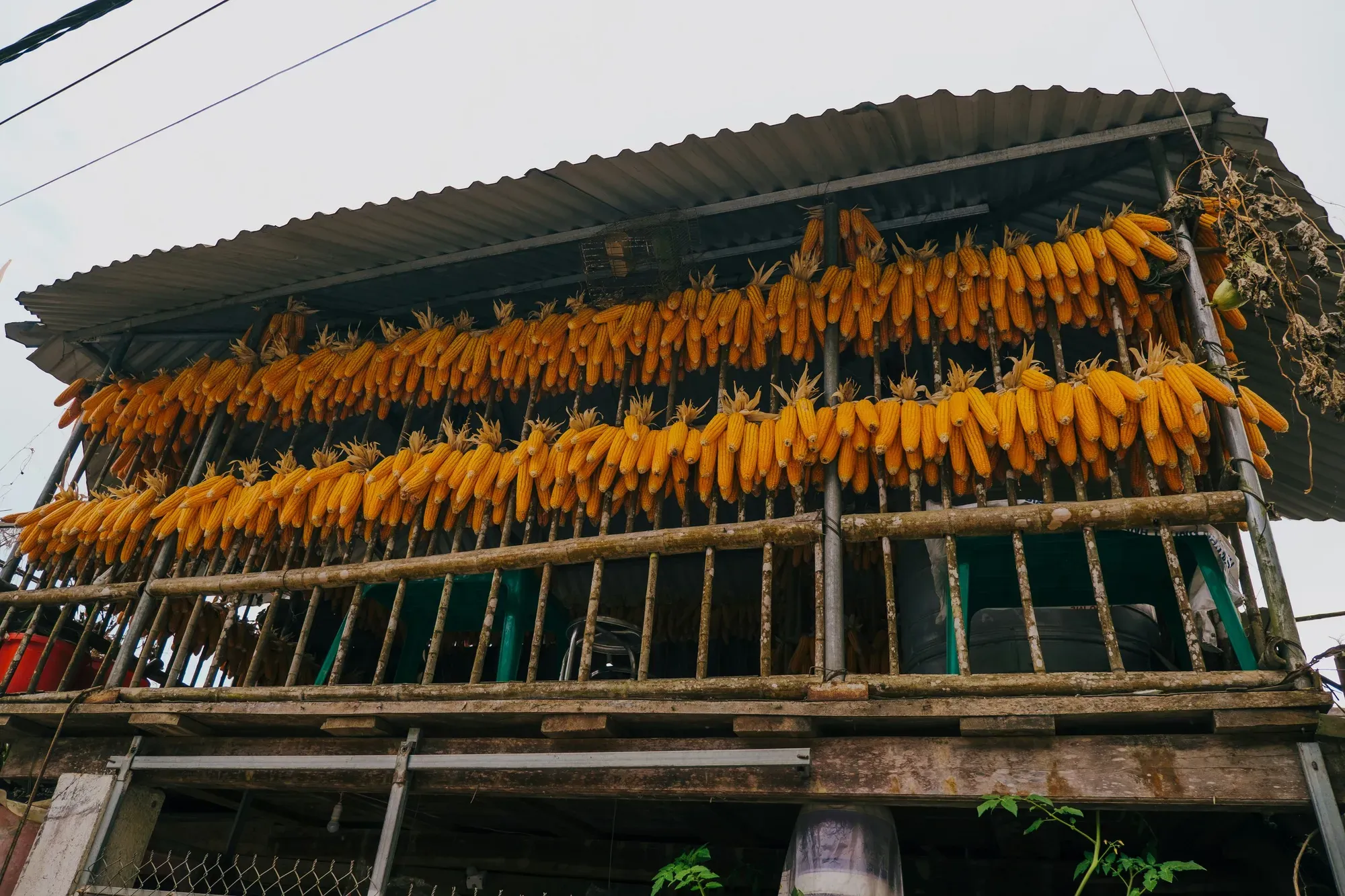
To grasp why the Hmong eat ground corn rather than rice, you have to look at the vertical terrain of the northern karst plateau.
Fresh water is rarer than gold on these limestone ridges. Arable soil exists only in handfuls tucked inside jagged crevices; there are no irrigated terraces or wet-rice valleys here. The only crop resilient enough to anchor roots into rock, brave summer thunderstorms, and survive frost is hardy local flint corn.
After autumn harvest, corn cobs hang from ceiling rafters above the hearth for months to prevent pests. Preparing men men from these hardened kernels requires immense physical effort:
- Stone milling: Heavy hand-carved stone grindstones turn creakily before dawn. Hard kernels are crushed, then winnowed repeatedly in flat bamboo trays to separate the husks and retain only fine, uniform cornmeal.
- First hydration: The dry meal is sprinkled sparingly with warm water and rubbed vigorously between both palms so moisture absorbs evenly without clumping into paste.
- Double steaming: The flour goes into a tall wooden barrel steamer set over boiling water. Once fragrant steam rises, the meal is tipped out onto bamboo mats, fluffed with chopsticks, moistened slightly a second time, and returned to the steamer. This second pass cooks the starch thoroughly, turning coarse meal into a tender, nutty, easily digestible crumb.
How to eat men men properly: never eat it dry
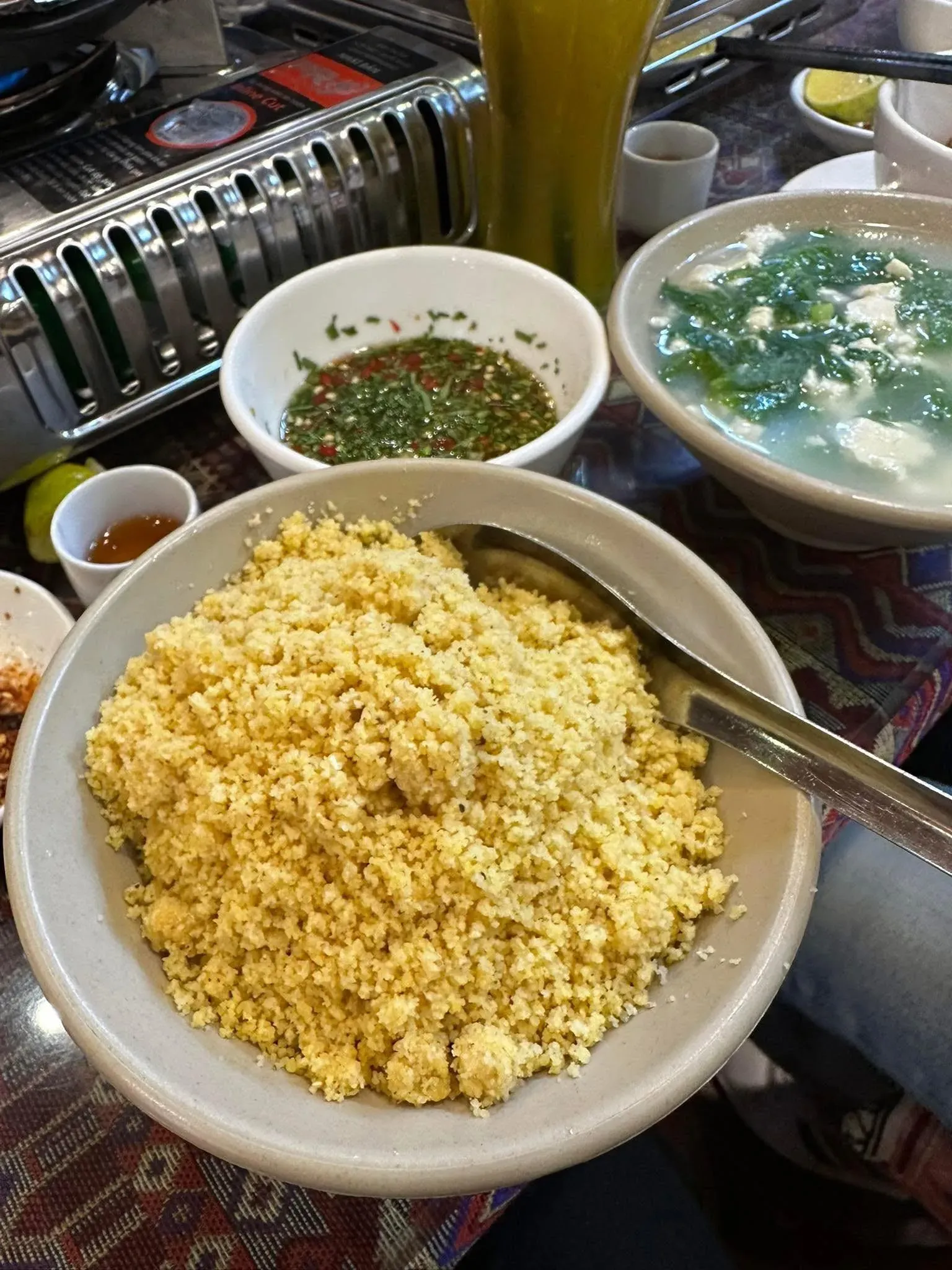
No highland local would ever eat dry spoonfuls of men men straight from the bowl. Consuming it is an intuitive exercise in texture and balance:
- Spoon into hot mustard-green soup: Beside every bowl of men men sits a steaming bowl of highland greens (cai meo) boiled with sliced mountain ginger or bone broth. You spoon a mound of men men directly into the soup, stirring gently. The rich, nutty corn flour instantly softens, mellowing the bitter bite of the greens and creating a comforting porridge-like broth.
- Charred fresh chili: High-altitude dining relies on intense heat to cut through morning frost. A fresh bird’s eye chili charred directly on open charcoal, mashed into the soup with a pinch of coarse sea salt, awakens the palate immediately.
- Side dish for thang co: In market drinking sheds, men men accompanies simmering cauldrons of thang co horse-meat stew. The herbal richness of the broth is soaked up by the cornmeal, making a filling meal that fuels hard physical labour on steep mountainsides.
A lesson in highland dignity

Men men is not aristocratic banquet food, and it may not appeal to visitors expecting tender fragrant white rice.
Yet when you sit on a small wooden bench beside an earthen homestead, accepting a steaming bowl from the weathered hands of a grandmother, remember what it represents. Every golden grain was coaxed from stubborn rocks, hand-carried up vertical cliffs, and milled through sheer human endurance. It is the purest taste of survival on the northern frontier.


